
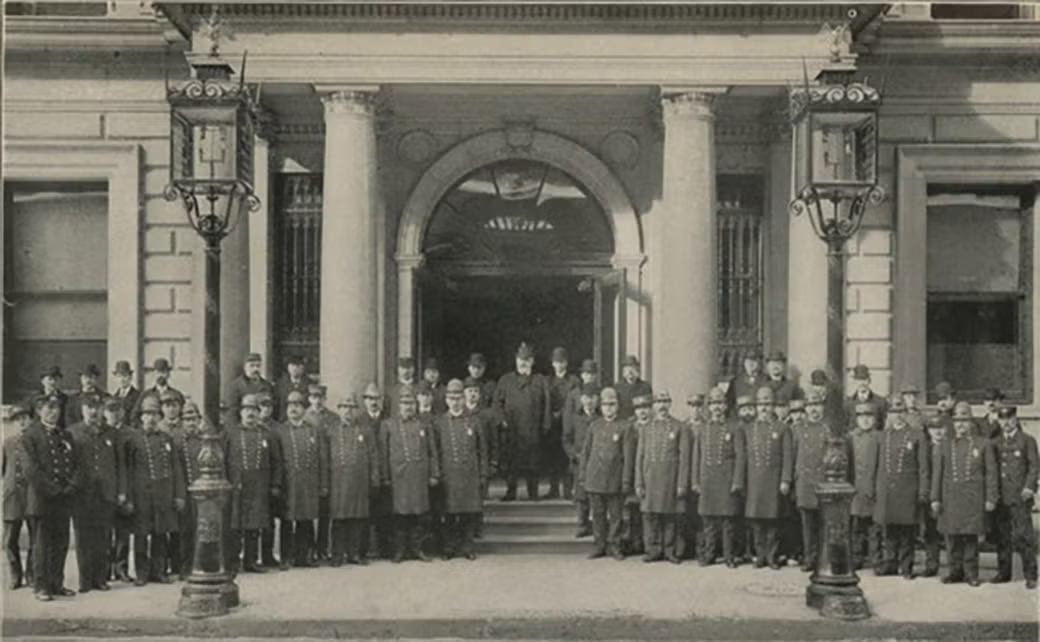
160th Anniversary
For 160 years, the ASPCA has worked to prevent cruelty, protect animals and respond when animals are in danger. The commitment of generations of supporters has helped that work grow from the ASPCA’s earliest cruelty prosecutions in 1866 into a nationwide effort to improve the lives, safety and well being of animals today.
Read more of this story
As the nation’s first animal welfare organization, the ASPCA has been part of the American story for 160 years — leading the way to prevent cruelty, protect animals and respond when we’re most needed.
While April 10, 1866, marks the day it all began, the entire month of April holds special meaning for us. Each April, we also recognize National Prevention of Cruelty to Animals Month, National Dogfighting Awareness Day and Animal Advocacy Day, and we do our best to leverage these observances to advance public education and drive meaningful action for animals.
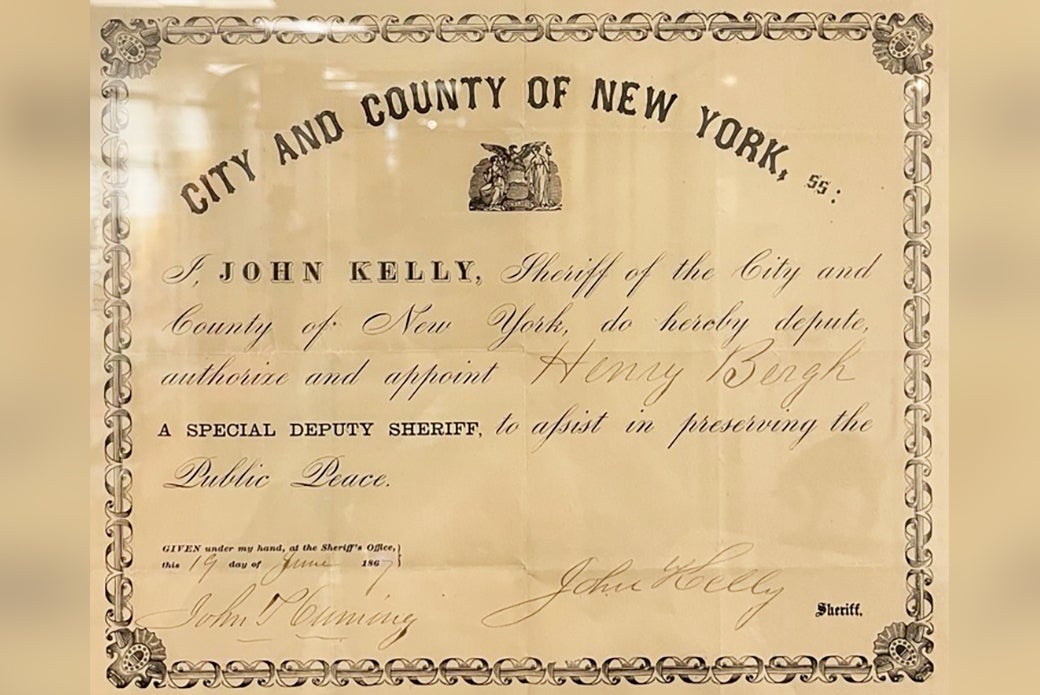
Our work is rooted in the bold, determined vision of our founder, Henry Bergh. In June 1867, Bergh took an extraordinary step when New York County Sheriff John Kelly appointed him assistant deputy sheriff, empowering him “to assist in preserving the public peace.” Never one to shy away from bold behavior in the service of compassion, Bergh soon convinced New York County District Attorney A. Oakey Hall to admit him to the bar — without an exam — appealing “in behalf of the merciful cause to which I am devoting my life.” With that, Bergh was named an assistant district attorney, prosecuting cases beyond New York City. A decade later, in 1876, his authority expanded even further when he was granted the power to represent New York State in state court.
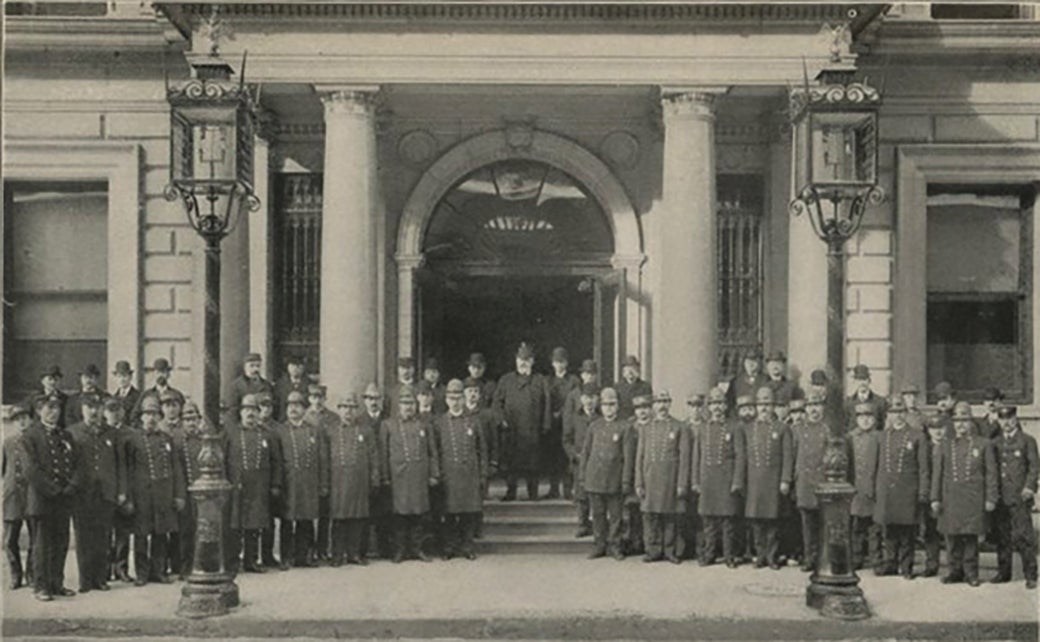
In our very first year, the ASPCA made an extraordinary impact, securing 66 convictions from 119 prosecutions. Just 11 agents, each earning $16 a week and empowered to make arrests across New York, carried out the work. The momentum was unstoppable. By 1874, the ranks of ASPCA agents had grown tenfold, and by 1888 — the year of Henry Bergh’s death — the organization employed 206 agents operating in 47 New York counties. Over Bergh’s remarkable 22-year tenure, the ASPCA prosecuted nearly 14,000 cases, removed more than 35,000 animals from grueling labor, and humanely ended the suffering of 25,000 horses deemed “disabled past recovery.”
From our earliest prosecutions in the 1860s to our impact today, our story reflects a legacy of compassion backed by decisive action.
Confronting Cruelty Through Prevention and Prosecution
Much like today, in 1866 prevention was recognized as the most powerful way to confront widespread, systemic cruelty. Our founder believed that through education, cruelty could be stopped before it began — and, if that failed, through accountability and prosecution.
Among the most brutal crimes the ASPCA set out to end was dogfighting. Blood sports were deeply ingrained in the culture of the time; staged spectacles pitting chained bears against dogs were grimly common. But after the death in 1870 of Kit Burns, the most notorious animal-fighting ringleader of the mid-19th century, dogfighting largely retreated into the shadows. The ASPCA’s 1887 Annual Report notes that dogfighting, cockfighting and rat-baiting — collectively condemned as “demoralizing exhibitions” — had been driven underground, becoming “most difficult to discover […] by reason of the secrecy in which they are conducted.”
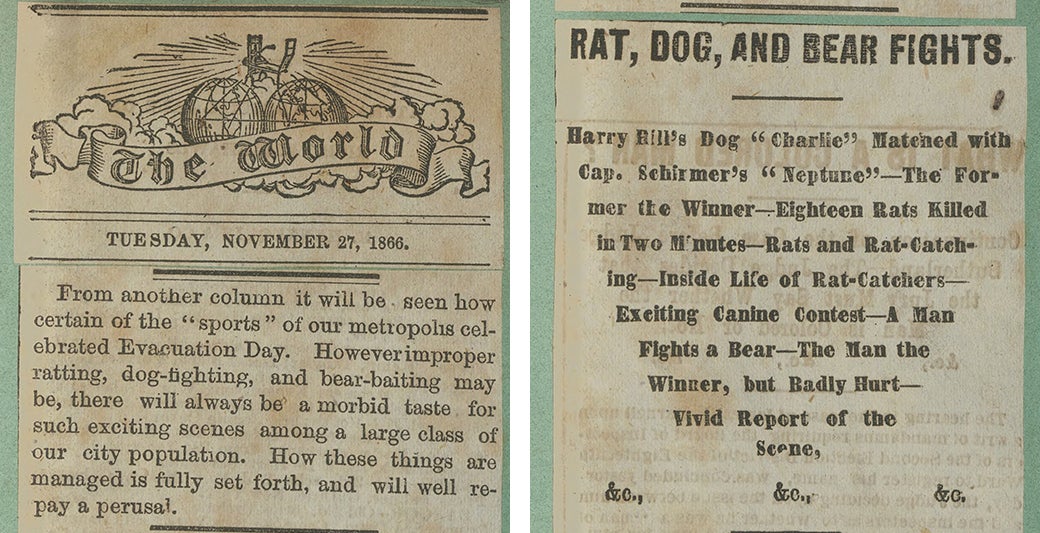
Yet even today — despite being a felony in all 50 states, the District of Columbia, Guam, Puerto Rico and the U.S. Virgin Islands — this crime persists, largely unchanged.
In February of this year, the ASPCA helped dismantle dogfighting operations in Dallas, Texas, that involved more than 200 dogs. Today, as in Bergh’s time, we’re confronting this illegal, underground world head-on through investigations, law enforcement training, legislation and advocacy. And we’ve gone further, recognizing these dogs as both victims and individuals and working to rehabilitate them — reflecting meaningful progress for our organization and society.

Across generations of advocates, staff and supporters, our commitment to preventing and responding to cruelty has never wavered, and our enduring mission continues to protect animals, save lives and build a humane future.
Giving with Pride
From the very beginning, financial support has done more than sustain the ASPCA — it has given animal lovers a powerful sense of pride, purpose and belonging, uniting them in a growing, compassion‑driven community and movement.
In the organization’s first year, more than $7,400 was raised to support the Society’s work, including $296 collected through criminal fines — the equivalent of about $163,000 today — a remarkable show of early commitment to protecting animals.
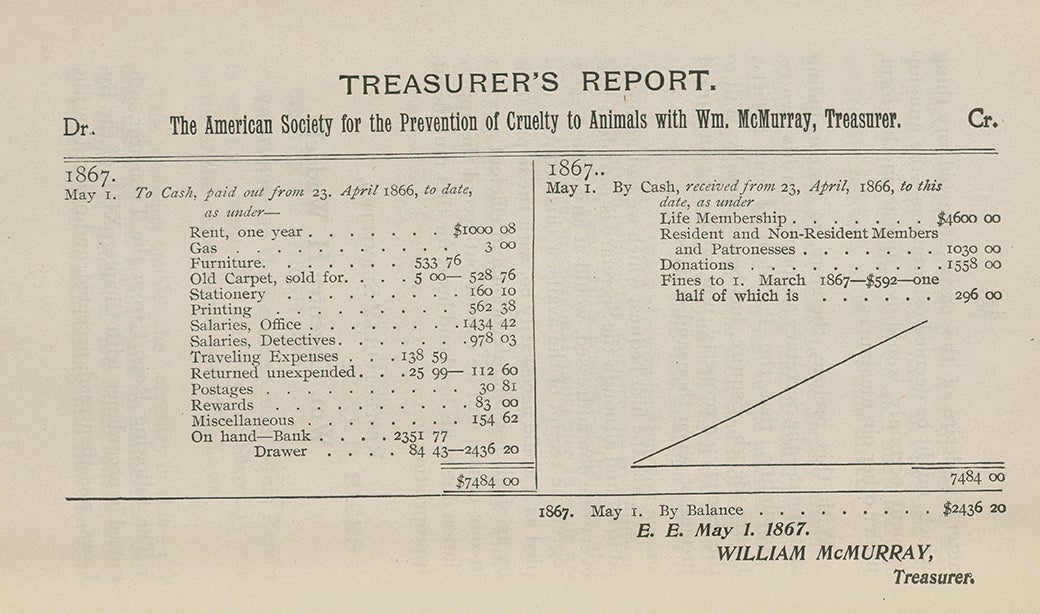
Like other philanthropic institutions of the era, the ASPCA depended on regular donors —known then as “subscribers” — for stability and long‑term planning. Annual memberships were set at $10 “for a gentleman” and $5 “for a lady,” inviting supporters to formally align themselves with the cause.
Just 25 years later, that foundation of generosity had grown dramatically: The ASPCA’s annual income reached nearly $100,000, driven primarily by estate bequests. Subscriptions and donations contributed $7,000, while fines accounted for $3,300 — evidence of a maturing organization with lasting support.
The ASPCA’s earliest benefactors included some of New York’s most prominent figures and philanthropists, among them Charles L. Tiffany, Cornelius Roosevelt and members of the Astor family. Women also played a vital role. In our first year, more than 200 members were on the rolls, including the famous opera singer Madame Antoinette Otto, and in later years, the writer Edith Wharton and Mrs. F.W. Vanderbilt, whose husband’s grandfather, Cornelius Vanderbilt, was once a target of Bergh’s for overworking the horses on his rail lines.

Henry Bergh led by example. He purchased a $100 subscription himself and was listed as a life member in our annual reports until his death. At the ASPCA’s first annual meeting on May 2, 1867, it was announced that Bergh had become the ASPCA’s first benefactor “by Will,” leaving a property that generated $7,000 annually — a profound act of faith in the future of the mission. Today, many of the ASPCA’s programs and services are made possible by individuals who choose to include the ASPCA in their planned giving.
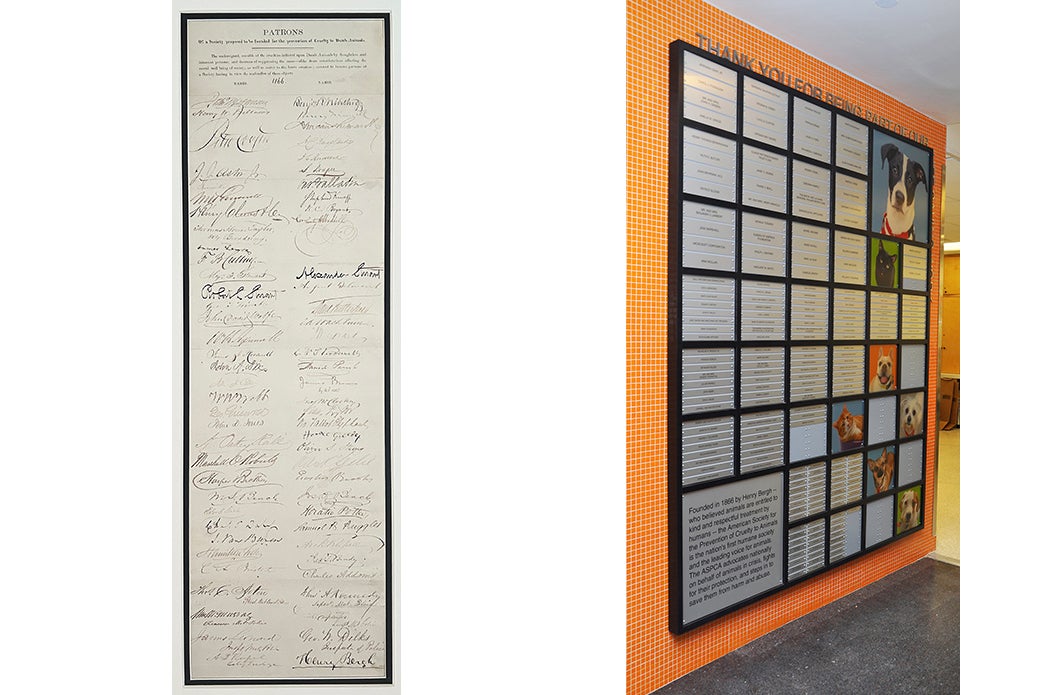
As we celebrate the founding 160 years ago of an organization that sparked a movement for vulnerable animals, we invite you to be part of what comes next and make a difference.
R&R Playgroups
Your generosity gives dogs recovering from cruelty the time and specialized care they need to feel safe again. At the ASPCA’s Recovery & Rehabilitation Center, regular playgroups help dogs exercise, build social skills and gain confidence, sometimes with a little help from more outgoing canine friends.
15K Kitten Milestone in LA
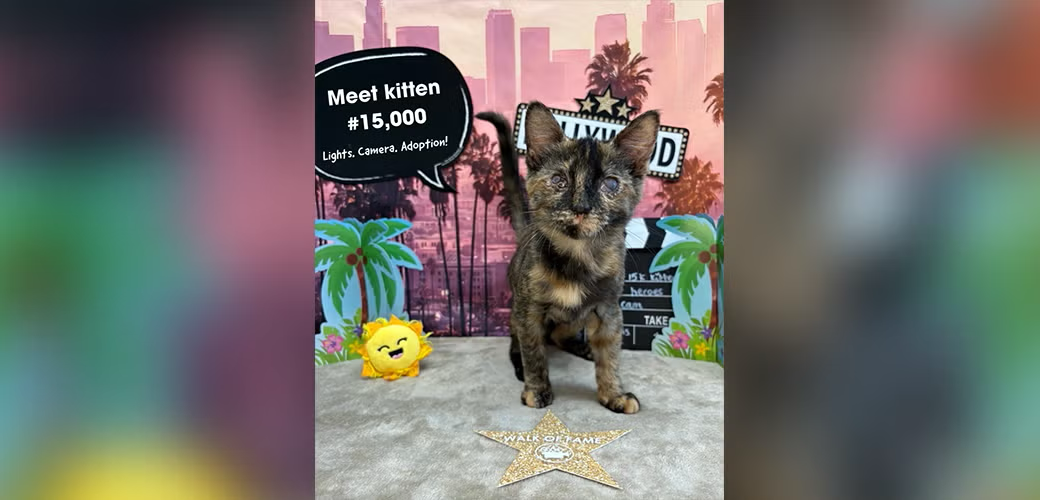
Partially blind and in need of medical support, Juno became the 15,000th kitten helped through the ASPCA’s Kitten Foster Program in Los Angeles. Supporters help sustain the ASPCA’s work for vulnerable kittens like Juno, giving them opportunities to receive the care they need and, in her case, a safe foster home with a kitten friend to help her navigate the world.
Read more of this story
Today, July 10, is National Kitten Day and in honor of the holiday, we are thrilled to announce a significant achievement of caring for 15,000 kittens through the ASPCA Kitten Foster Program in Los Angeles. This program relies on the generosity of foster caregivers who provide lifesaving care to kittens in need. This milestone comes during the height of feline breeding season, also known as kitten season, a time of year when shelters nationwide are overwhelmed with vulnerable, newborn cats.
The 15,000th kitten, Juno, was brought into the Los Angeles County Animal Care Center, Baldwin Park by a Good Samaritan. At roughly three months old, this partially blind kitten was in need of medical support. To get the care she needed, the Animal Care Center requested our help.
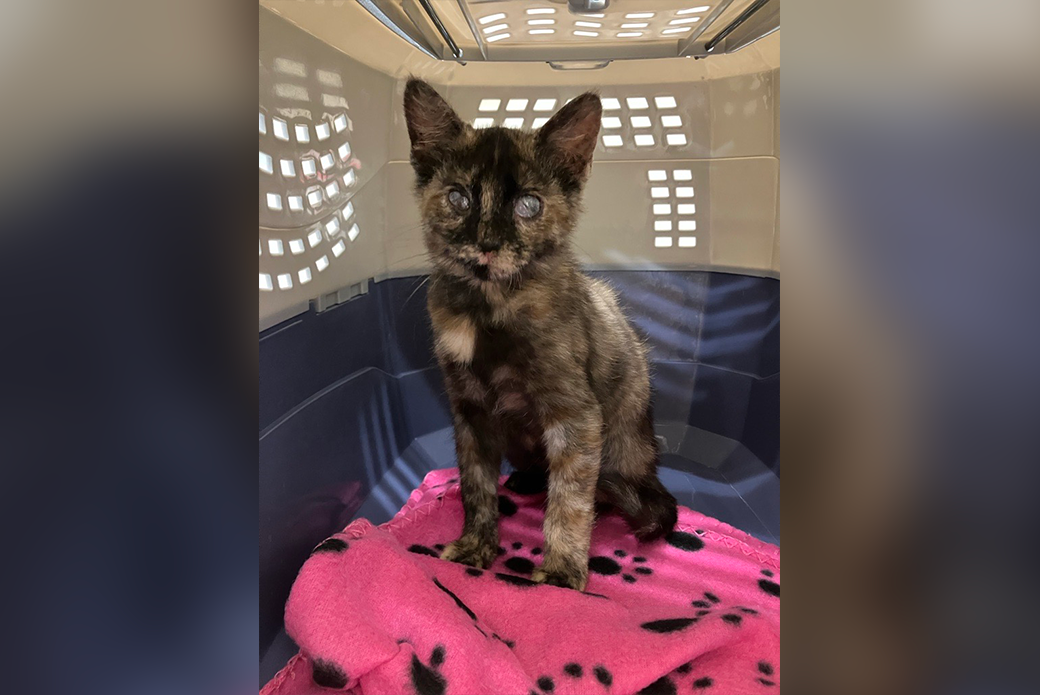
After being transferred into our care, Juno was put into a foster home, where her foster caregiver provided unwavering support. Now, Juno is thriving in her foster home and has even been paired with a helper kitten to help her navigate the world with limited vision. Our staff is currently monitoring her eyes, which may require surgery to help prevent further infection and relieve any potential pain.
“Every kitten deserves a chance to thrive,” said Hella Tyler, director of foster care for the Los Angeles feline programs. “Reaching 15,000 kittens rescued through our Los Angeles Foster Program is more than a milestone, it’s 15,000 toe beans and little heart beats that have been given hope, care and the opportunity for a brighter future. This is all made possible by our incredible dedication of our foster volunteers and community — we are so grateful!”
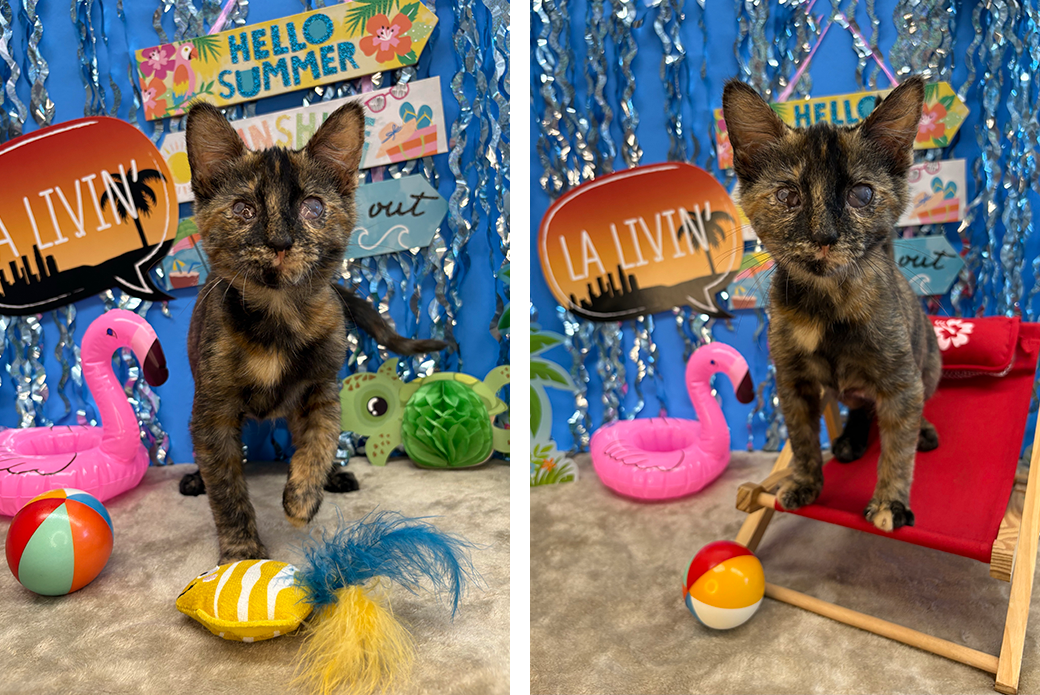
Right now, our Los Angeles Foster Program is in urgent need of specialized foster caregivers, willing to help care for sick kittens or provide frequent bottle-feeding. Learn more about how you can foster kittens in Los Angeles! Alternatively, if you’re in New York City and want to foster kittens, get more information here or find a shelter near you.
New LA CVC
Support for the ASPCA helps make veterinary care more accessible to animals and families who might otherwise struggle to get it. The new ASPCA Community Veterinary Clinic by Kathy Taggares in Los Angeles will provide free and affordable preventive and basic veterinary care for dogs and cats in an area where hundreds of thousands of pets live with families who have little or no access to veterinary services.
Read more of this story
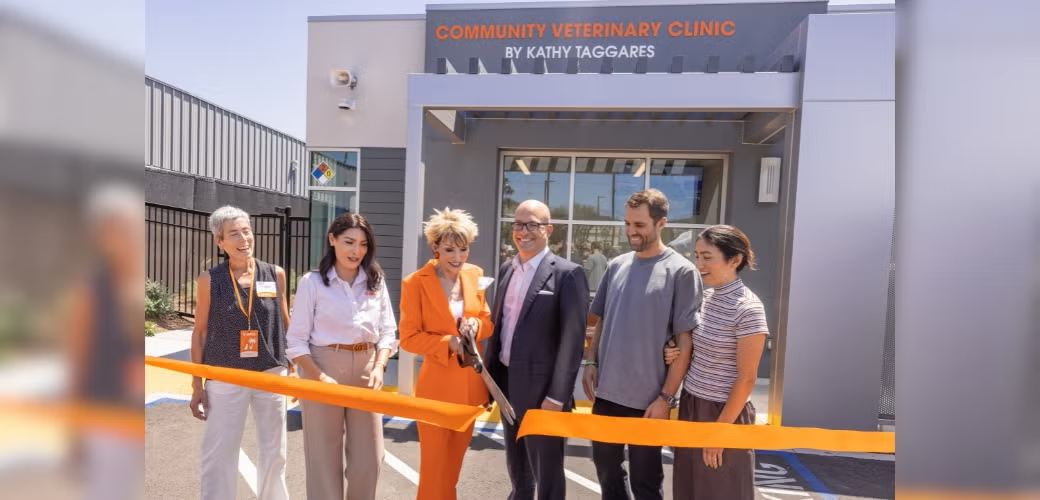
On July 29, the ASPCA hosted the grand opening of the ASPCA Community Veterinary Clinic by Kathy Taggares in Los Angeles, located in Carson. The new clinic will provide access to affordable veterinary services for tens of thousands of underserved pet owners in the South Bay area each year and improve the health and welfare of dogs and cats in the surrounding community.
This clinic was made possible by Los Angeles resident and entrepreneur, spay/neuter advocate and ASPCA supporter Kathy Taggares, who has generously committed $2.5 million to bring these vital services to Los Angeles pets who need them most. Taggares has supported the ASPCA’s spay/neuter initiatives in Los Angeles since 2012, having donated more than $4.8 million to the ASPCA’s lifesaving programs.
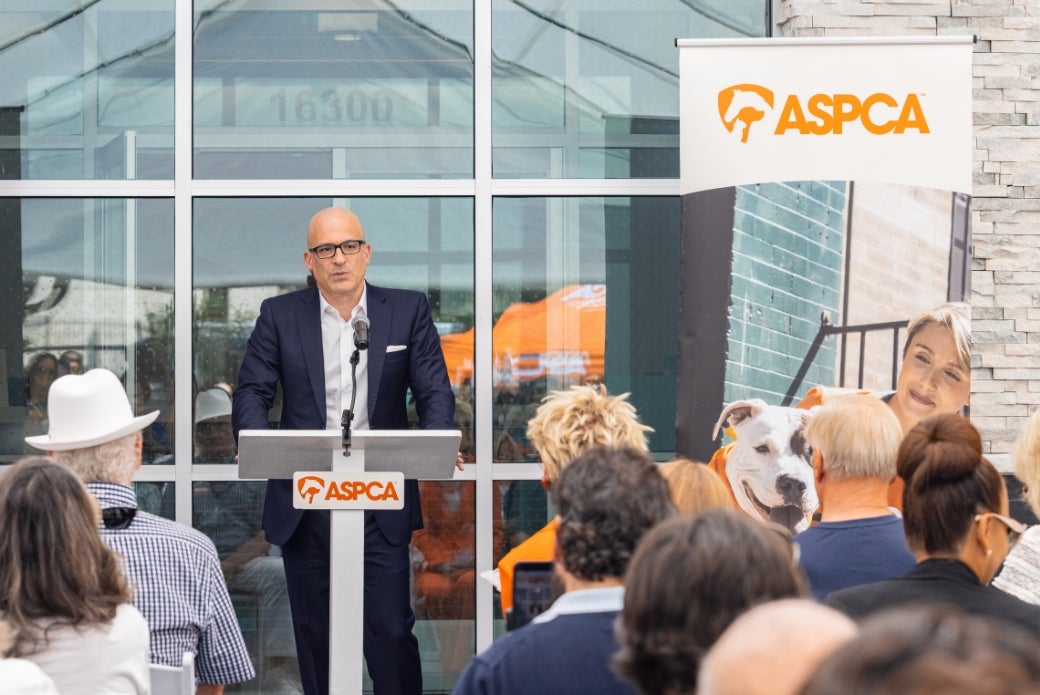
The grand opening featured a brief ceremony where Matt Bershadker, ASPCA President and CEO, delivered welcome remarks to all guests and supporters in attendance, discussing the ASPCA’s vision for affordable veterinary care and praising Taggares for her tremendous generosity.
“Today is about much more than simply opening a new building. We’re opening doors to opportunity, hope and healthier futures for animals and the people who love them,” said Bershadker. “Kathy Taggares has always believed that meaningful change requires more than generosity, it requires investing in solutions that can create lasting impact. This clinic is a powerful example of that philosophy in action.”
Stephany Soto, ASPCA’s Western Region Senior Director of Operations of Community Medicine, touched on her own journey into veterinary medicine, reminiscing on various pets she has shared her life with throughout the years, sharing that, “They were never ‘just pets.’ They were family, teachers and siblings, and the reason why I chose this career.” She also spotlighted the organization’s impact on communities across the country by stating, “I’ve seen firsthand how community medicine transforms the lives of pets and animals by removing barriers to care, meeting families where they are and building trust through compassionate service … but this work did not begin with us in California. This clinic stands on the foundation built by our Community Veterinary Clinics in Brooklyn, Queens, the Bronx and Miami.”
Taggares, with gratitude and appreciation, shared, “Years ago, when I wanted to get involved with animal welfare, I knew I wanted to do something significant. I knew I needed to find an organization that I could really align with.” She went on to share her utmost hopes for the new clinic, stating, “I have a dream that someday every animal, every cat, every dog, will find a loving home … we have a long way to go, but this clinic gets us one step closer.”
Following the opening remarks, former Los Angeles Dodgers All-Star and two-time World Series Champion Chris Taylor, along with his wife Mary, joined the esteemed group, including Bershadker, Taggares, Soto and ASPCA Chief Program Officer Bert Troughton, for the ribbon-cutting ceremony.
The ASPCA Community Veterinary Clinic by Kathy Taggares in Los Angeles is the fifth clinic we’ve opened in seven years, with the first clinic opening in Miami, followed by clinics in New York City’s Bronx, Brooklyn and Queens boroughs. To date, the ASPCA Community Veterinary Clinics have collectively served more than 150,000 cats and dogs since 2019. These clinics make veterinary care more accessible and affordable, and the ASPCA continues to develop initiatives to serve the millions of pets living in poverty with their owners nationwide.
The location of the new clinic was chosen because of the lack of affordable veterinary care in the surrounding area. The ASPCA estimates that more than 500,000 Los Angeles County cats and dogs are currently living with people in poverty who have little to no access to veterinary services.
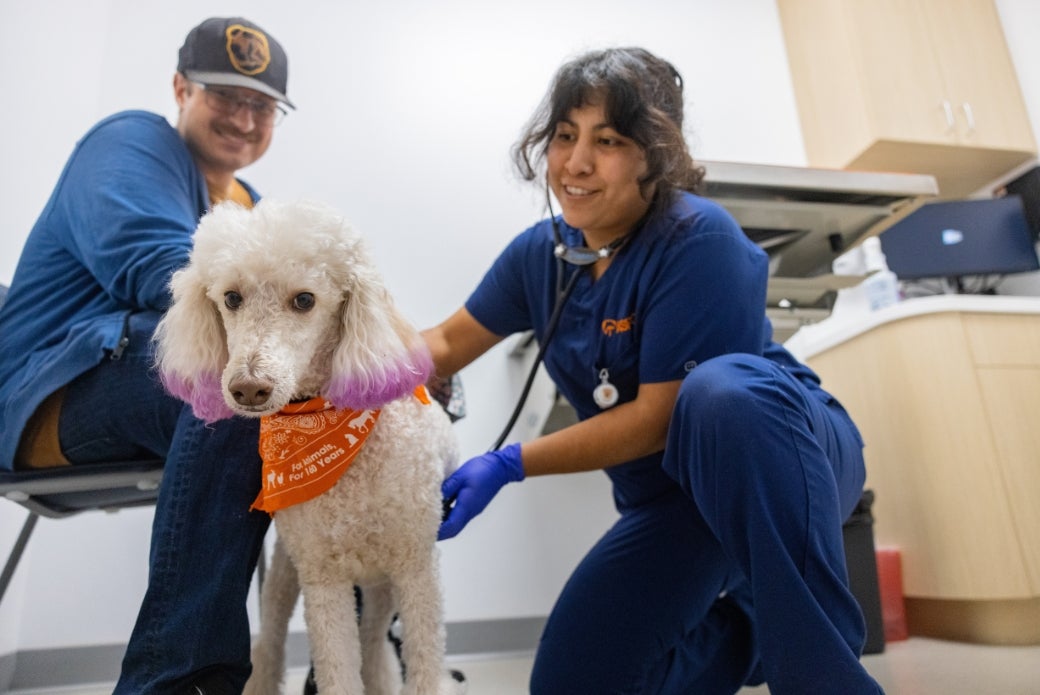
The ASPCA Community Veterinary Clinic by Kathy Taggares will offer free and affordable basic and preventive care to dogs and cats, including vaccinations, treatment for minor illnesses and injuries, and spay/neuter surgeries. The clinic will also provide care to homeless dogs and cats from local animal rescue organizations, including Carson Animal Care Center. Pet owners interested in learning more about the ASPCA’s new clinic should visit www.aspca.org/carsonto confirm their eligibility.
Expanding Our Critical Work in Los Angeles
This new clinic is an expansion of the critical work we’ve been doing in Los Angeles for over a decade. Since 2014, we have been assisting pets and pet owners in Los Angeles through on-the-ground programs, including veterinary care, spay/neuter services, and a kitten foster and adoption program.
The ASPCA Spay/Neuter Clinic in South Los Angeles has provided over 175,000 spay/neuter surgeries to pets, including providing more than 26,000 spay/neuter surgeries to shelter animals at Los Angeles City’s Chesterfield Square Animal Services Center. We also operate mobile spay/neuter and veterinary care clinics in under-resourced communities across Los Angeles and have safely transported more than 70,000 dogs and cats from Los Angeles-area shelters to other organizations for a better chance of adoption.
We also operate our Los Angeles Kitten Foster Program out of the Los Angeles County Animal Care Centers, where ASPCA foster caregivers have helped over 15,000 cats and kittens find homes.
In addition to our on-the-ground work, we’ve provided more than $16 million in grant funding to Los Angeles-based groups since 2008. Most recently, we announced a first-of-its-kind collaboration with Best Friends Animal Society to provide LA Animal Services with a $14 million funding and operational support initiative to strengthen and enhance services across the City’s six animal shelters. With Council approval secured, this transformative, multi-year initiative will deliver immediate resources while building long-term, sustainable improvements for animals and the Los Angeles community.
Tulle
Tulle was only four months old when he was among more than 150 dogs removed from locations connected to a suspected dogfighting case in South Carolina. After receiving care from the ASPCA, he found a home with Felicia, who renamed him King. Today, his life includes cuddles, car rides and enthusiastic trips to the dog park. Generosity from supporters helps give animals coming from cruelty the care and protection they need to reach days like these.
Read more of Tulle's story
Felicia S. had been living alone for a while when she decided it was finally time to get a dog. Having made up her mind, she began searching for dogs online. That’s when she came across 4-month-old Tulle, who was located at an ASPCA recovery center. She admired his photo for a while but went on looking at other dogs to see who else was out there. All the while, she kept thinking about Tulle.
Later, on July 17, 2025, Felicia showed her coworker a photo of Tulle.
“I said, ‘I’m thinking about getting a dog. What do you think of him?’” Felicia recalled. “She said, ‘He’s cute but are you sure?’ I was like, ‘Yeah, we’re going to go meet him.’ She said, ‘We?’ I said, ‘You’re coming too, and my niece. We’re going to go meet him.”
That same day, Felicia, her coworker and her niece went to meet Tulle.
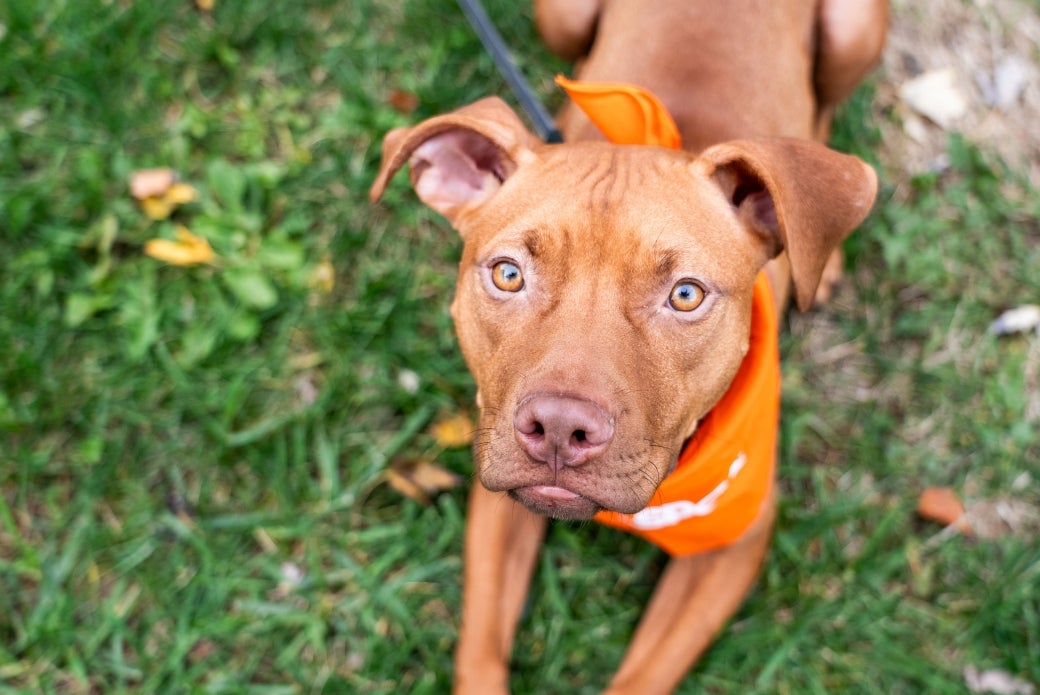
“He was rambunctious! He had a lot of energy, and I wasn’t sure if I could handle that,” recalled Felicia. “Then my niece and my coworker said, ‘Nope! Just right for you Felicia, take him home!’ Everyone told me I could take a day and sleep on it, but I just adopted him that same day.”
It wasn’t until two weeks later that Felicia realized the significance of that day.
“July 17 is the anniversary of my fiancé’s funeral,” Felicia told us. “It didn’t dawn on me until I was looking at Tulle’s papers and was wondering why the date looked so familiar. I realized it was the day of his funeral and said, ‘Well, it was meant for me to have him then.’”
Paying homage to her late fiancé, Felicia renamed Tulle, King.
“King was the last name I was supposed to have,” explained Felicia. “It suits him too! He’s the king of the house.”
A Past of Cruelty
At just 4 months old, King had already seen more cruelty in his life than any dog ever should. In April 2025, King was one of more than 150 dogs removed from 10 locations across Dillon and Marion counties in South Carolina. The dogs — many of whom were observed with untreated injuries and scarring consistent with dogfighting — were transferred into our care and given the critical care they needed.
When Felicia heard how King was sadly brought up, she wasn’t surprised. In fact, after living together, she has found that his past explains a lot about him. What she did find surprising, however, was some people’s opinions about pit bulls in general.
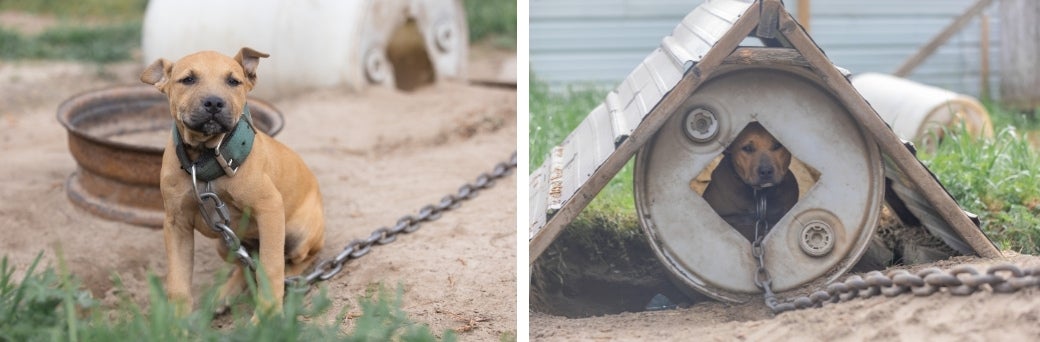
Dogs found in chains at one of the 10 locations across Dillion and Marion counties in South Carolina.
“People think pit bulls aren’t good dogs,” she said. “I’ve noticed that people will go the other way with their dog just because he’s a pit bull. He isn’t vicious, he just wants to play! Pit bulls are actually great dogs! They’re sweet, they’re kind, they’re rambunctious, they listen. I’m not training him to be vicious. He just wants to be loved. That’s what I’ve realized. He loves it all, the hugs, the kisses, the pets. He doesn’t like being in trouble.”
Thankfully, Felicia looked past the untrue and unfair stigmas about pit bulls and suspected dogfighting victims and decided to adopt King.
That day, our staff said something that stuck with Felicia as a consistent reminder of his past and the exciting future that lies ahead for them both.
“I remember they told me, ‘Everything with you is going to be a first.’”
Knowing that she was giving him his first loving home, his first car ride, his first trip to the dog park and his first cuddles on the couch, Felicia was excited to start their life together —and give him the best one she possibly could.
King of the Castle
On their first night home together, Felicia slept on the couch in her living room on the first floor of her home, right next to King’s crate. King was shy and enclosed, so she continued to sleep there for a few nights until, finally, she made her way back to her room upstairs. It took about two weeks, but King eventually got used to Felicia’s schedule and began letting his true colors shine through.
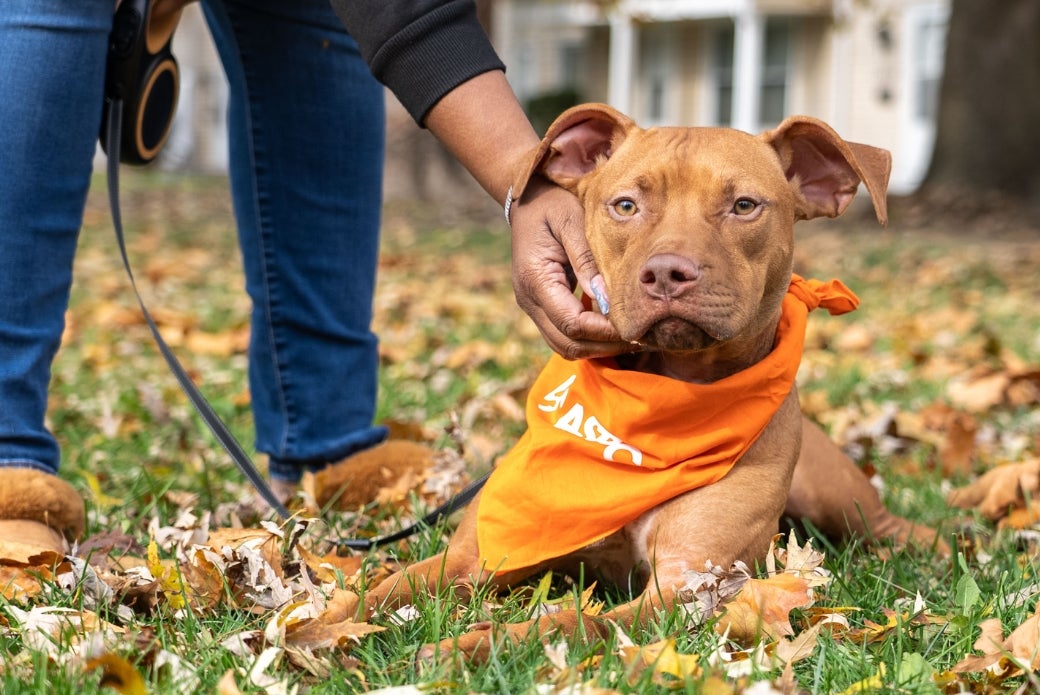
“Now he’s my alarm clock,” Felicia joked. “He knows that 6:30 or 7:00 in the morning, Mommy comes to let him out. He goes outside, comes inside and eats. Then he just runs around and plays.”
Feeling comfortable in his new home, King’s personality has gone from shy to open and friendly.
“Though, I’m pretty sure he’s judging a lot of people just by the way he cocks his head and looks at them,” Felicia laughed. “People tell me he acts like me! He’s not shy but he is standoffish to certain people.
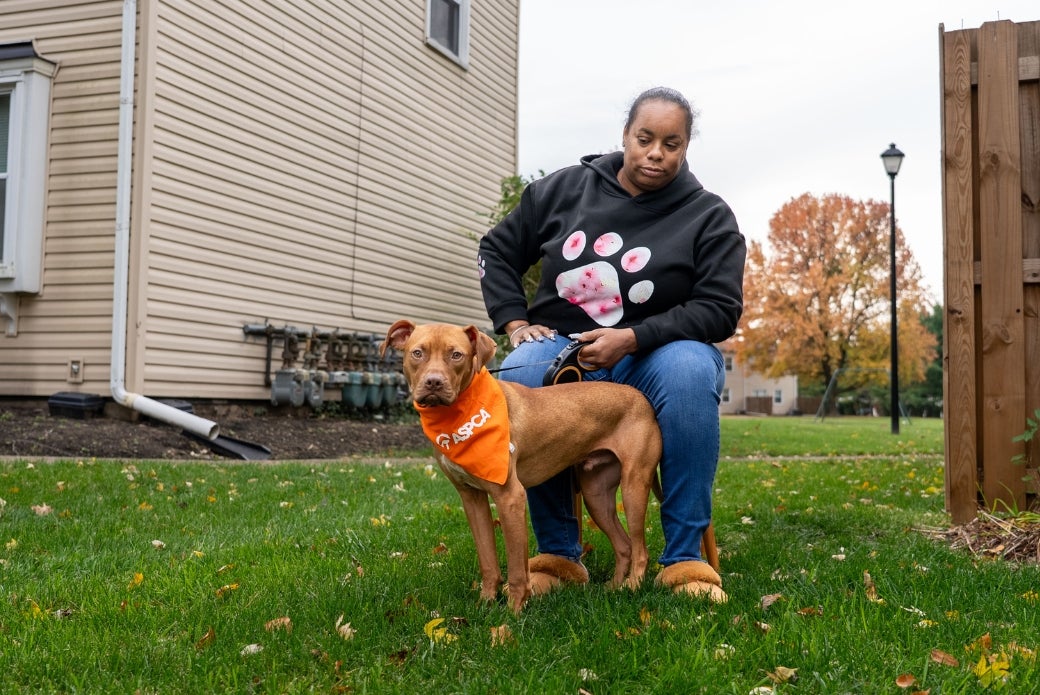
Felicia loves taking King to the dog park to burn off some of his puppy energy and gets a real kick out of watching him run.
“When he takes off running, he doesn’t know how to stop,” she explained. “He runs into me because he doesn’t know how to press the brakes yet! He has a lot of speed, and I need to teach him how to slow down but I don’t move as fast as him!”
When asked how she feels about being able to give King a kind, safe and loving home, Felicia said it feels good!
“Great, actually!” She corrected. “I chose to adopt a dog because there are so many dogs out there that need homes and love, especially because of where they came from. I would rather adopt. If I could, I would do it again. And I probably will in a year or two.”
“He’s my baby,” she added. “He’s going to be spoiled. He’s a good companion. I don’t have any kids, so he’s my baby. He’s changed my life for the better.”
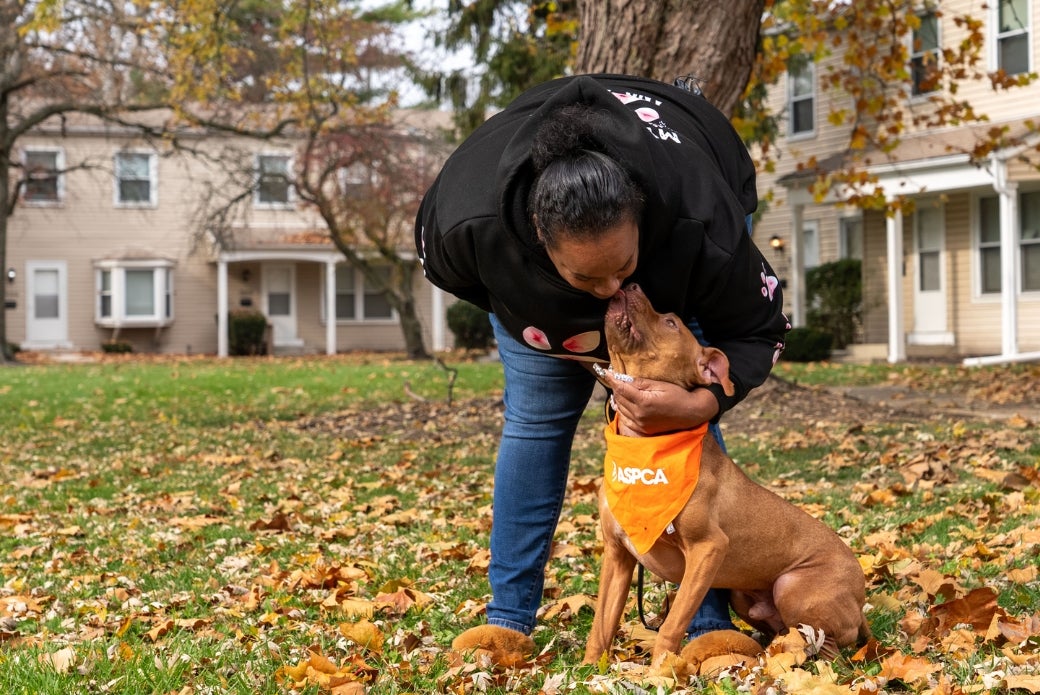
Ava
Six week old Ava arrived in ASPCA care with severe injuries and later developed parvovirus, adding another threat to her already fragile condition. Donor support helped make an innovative monoclonal antibody treatment available that her veterinarian says saved her life, along with the extensive medical care and months of recovery she needed before finding a loving home.
Read more of Ava’s story
When a Good Samaritan saw a small puppy abandoned and alone at a very busy intersection in New York City, they jumped into action. The poor 6-week-old puppy, later named Ava, was obviously in dire need of help, so the Good Samaritan brought her to a local police precinct.
Officers took a look at Ava and noticed how severely injured she was, prompting the case to be flagged for suspected animal cruelty. The officers then took her to an ASPCA partner veterinary hospital.
Radiographs and examination of her tiny body told a heartbreaking story.
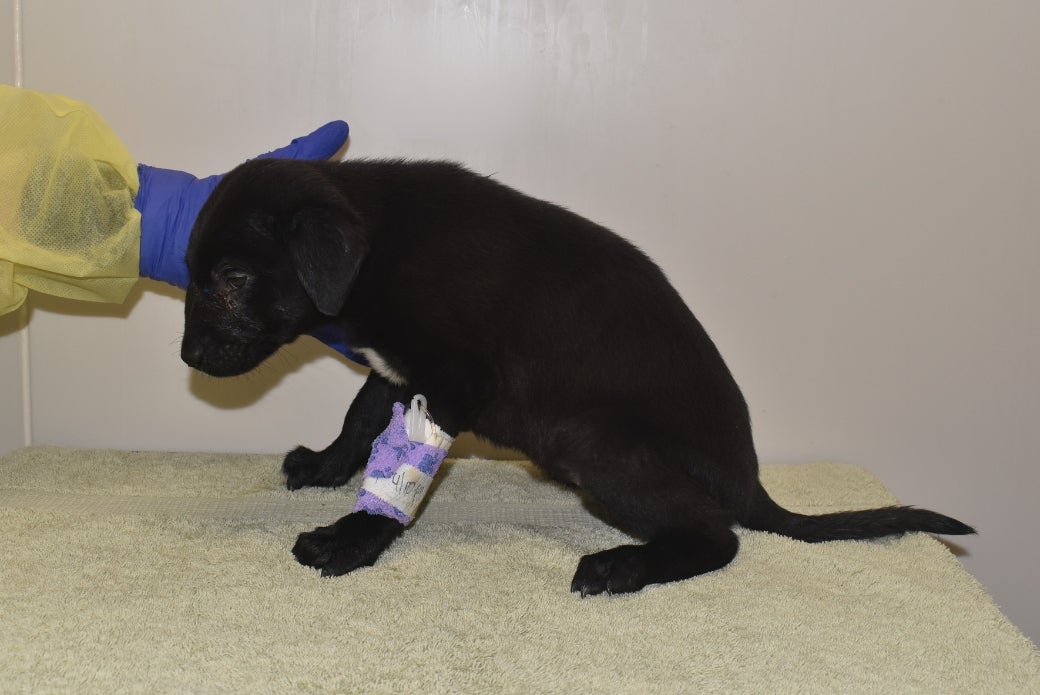
Ava was actively bleeding from both of her nostrils and had several facial fractures in her nose, palate and skull. As a result of these fractures, she had a misalignment to her bite, causing multiple teeth to poke into her palate resulting in even more pain. She also had a deep penetrating wound near the inner corner of her eye breaching her sinuses and causing free air to leak into the space under her skin every time she took a breath.
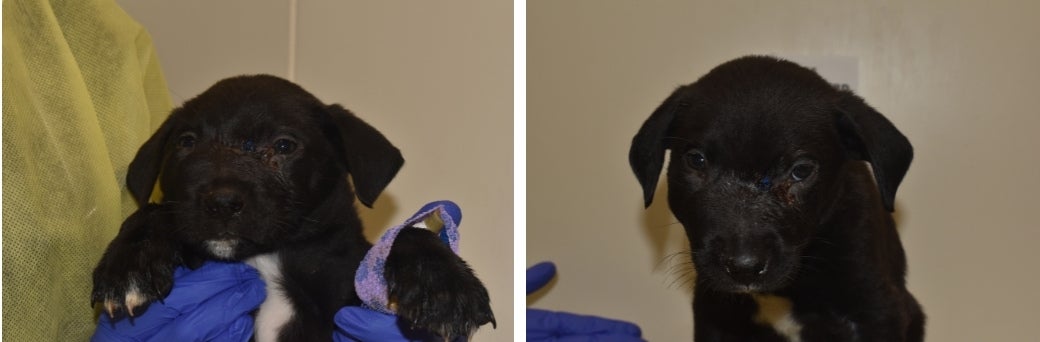
“She was only 6 weeks old and had already endured so much trauma,” said Dr. Aubrey Crowley, an ASPCA veterinarian. “The fractures were obviously untreated, unstable and quite painful for her. She had endured a lot of suffering in such a short amount of time in her life.”
One of the veterinarians at the partner clinic closed her wounds and gave her stabilizing intensive care. She was then transferred into our care the following day to continue medical treatment.
Continuing Treatment
Upon admission to the ASPCA Animal Recovery Center, Ava was placed in our intensive care unit.
“She was vocalizing, especially when her face was touched, which is a sign to us that she was in severe pain,” remembered Dr. Crowley. “I can only imagine what it feels like to have multiple bones in your face broken and to not be treated for that and just to experience that constant agony. Every time she tried to drink, lick, eat, it was incredibly painful for her.”
After closer examination, it was noticed that Ava had damage to the nerves in her face as a direct result of her injuries, most especially on the right side, that was affecting her ability to blink. As she was unable to fully close her right eye, she could not adequately circulate tear film across her eye, causing her cornea to become very dry and ulcerated. Corneal ulcerations are known to cause excruciating pain.
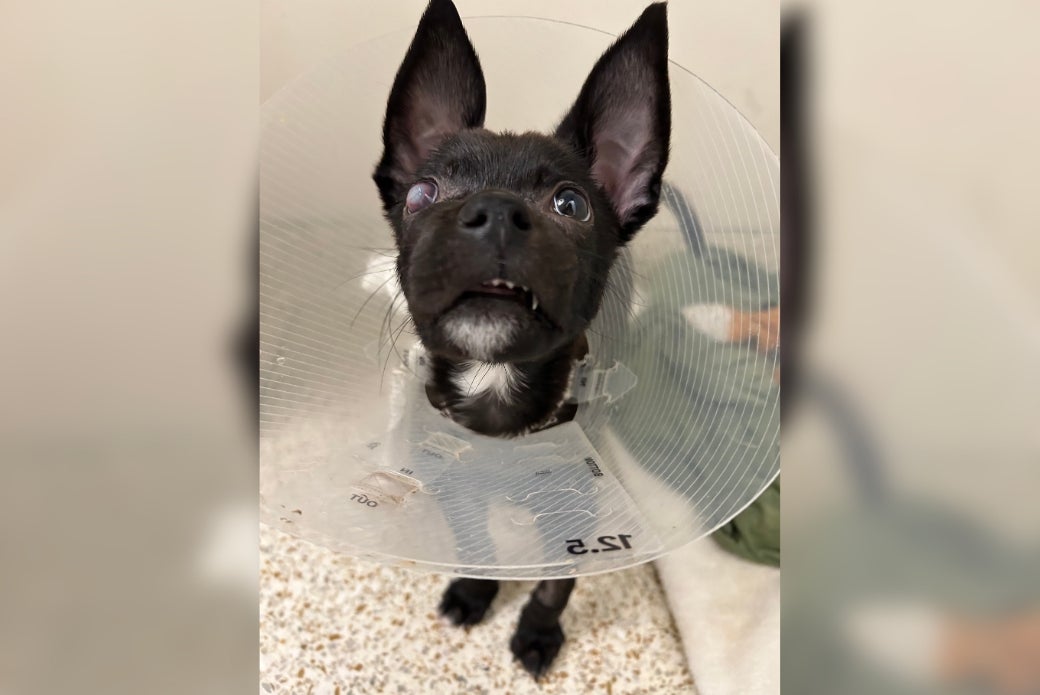
To help manage her pain, Ava required a constant intravenous infusion of pain medication. She was also provided with eye lubrication four times a day with a very thick optical lubricant to prevent her eye from further drying and ulcerating.
But just as Ava was beginning to become more stable, she faced a devastating new obstacle.
A Deadly Setback
After just a few days in our care, the 6-week-old puppy came down with parvovirus, a potentially fatal virus seen in puppies. Parvovirus, or parvo, is completely preventable with adequate vaccination, but unfortunately, Ava was unvaccinated.
Puppies are incredible vulnerable to illness as their immune systems are still developing, so any exposure to something like parvo can become a very serious condition very quickly.
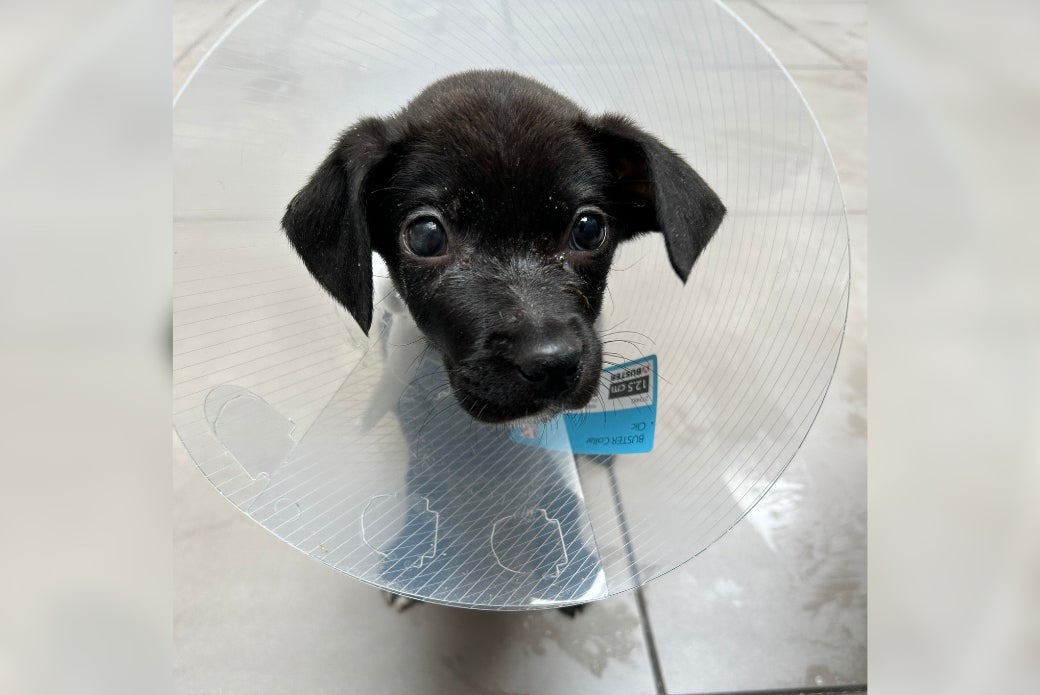
“Parvovirus is known to kill puppies when left untreated,” said Dr. Crowley. “It requires intensive supportive care because it causes a sloughing (or shedding) of the gastrointestinal tract, which makes them prone to secondary infections like sepsis as a result of losing their intestinal lining, allowing harmful bacterial to enter their bloodstream from their intestines. These puppies also have very low white blood cell counts, making them vulnerable to any other infection. They are at risk of aspiration pneumonia because the virus causes dramatic vomiting and regurgitation, which they can sometime breathe into their lungs and is another deadly consequence.”
The typical incubation period for parvovirus is one to two weeks, which indicated that Ava had been exposed prior to being admitted into our care.
Treating parvo requires intensive care for a normal puppy, but for Ava, her extensive injuries created even more challenges for treatment.
“From the beginning Ava wasn’t the best eater because her mouth was so painful, but then she had this additional hurdle to overcome that was causing her tremendous nausea and gastrointestinal pain,” explained Dr. Crowley. “Nutritional support was very difficult for her but also very important as a young, growing puppy. We had her on intensive fluid therapy, multiple antibiotics, multiple pain medications and medications that help encourage the gut to move so that fluid doesn’t stay stagnant so she’s not at risk for that vomiting and aspiration pneumonia.”
Traditionally, an additional treatment for more severe parvo cases would include placing a feeding tube from the puppy’s nose into their stomach, allowing for the removal of excessive fluid that puppies will vomit up, as well as introduce nutrition if the puppy isn’t eating. Unfortunately, due to the nature of the displaced fractures in Ava’s face altering her nasal cavity, passing a tube through her nose was impossible.
“We are very fortunate at the ASPCA to have the generous support of our donors, so we were able to try a relatively new treatment in veterinary medicine called monoclonal antibody therapy,” Dr. Crowley told us. “That’s an injection that’s given that has antibodies specifically for the parvovirus multiped many times over. Parvo wipes out their immune system; they have no ability to fight the infection — this gives them a fighting chance. For Ava, it saved her life.”
When first arriving in our care, Ava was very depressed, in a lot of pain and often just sitting hunched over.
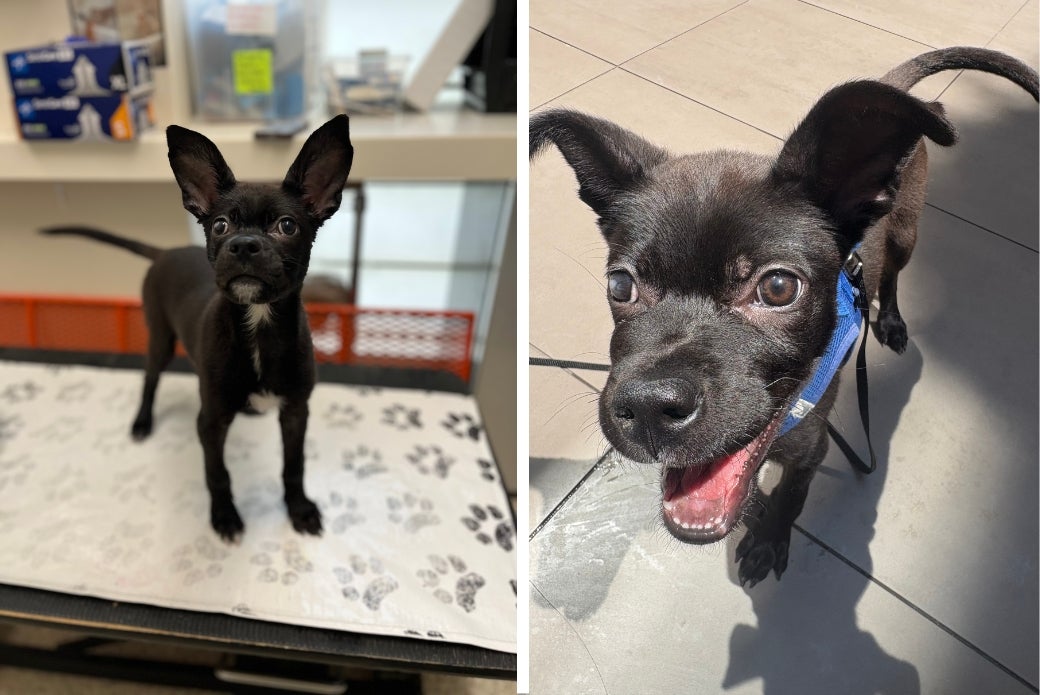
“Normally you would expect a 6-week-old puppy to be bouncing off the walls, chewing on things, barking, running around. Ava did none of those things,” she said. “But once she was over the hurdle of parvovirus, she completely changed. She became a bubbly puppy who was playful, social and rowdy. She became she lively puppy she was always meant to be.”
The Final Step to Recovery
Now that Ava was healthier and more stable, she was brought to ASPCA veterinary partner, Animal Medical Center (AMC) to have an extensive dental procedure done. They removed several of her teeth so that her jaw misalignment would no longer cause trauma to that area of her mouth.
“Dogs fortunately have plenty of teeth to spare, so she didn’t notice any were missing, but it did help her comfort level dramatically long term,” explained Dr. Crowley.
When she was feeling even more like herself, Ava was sent to see a veterinary ophthalmology team to see what the best course of action would be for her right eye.
“We would never want to remove a dog’s eye if we didn’t have to, so we sent her to see a specialist,” recalled Dr. Crowley. “The ophthalmologist assessed her and determined that the nerve damage to her face was permanent and unfortunately, she would never get that ability to blink back, so she would always be at risk for these painful ulcers on the surface of her eye. They made the recommendation to remove the eye. It was the right choice for her because she ended up having a very deep, non-healing ulcer in that eye that was painful. Afterwards she acted like nothing happened.”
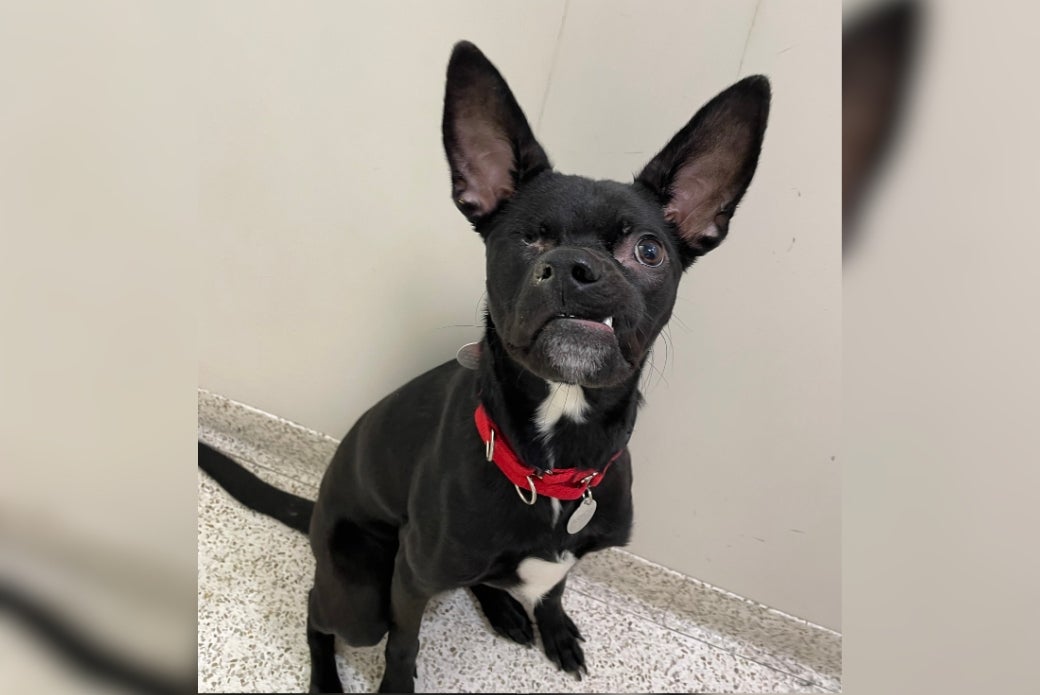
Just days later, the now-one-eyed dog was bouncing around like a puppy her age should.
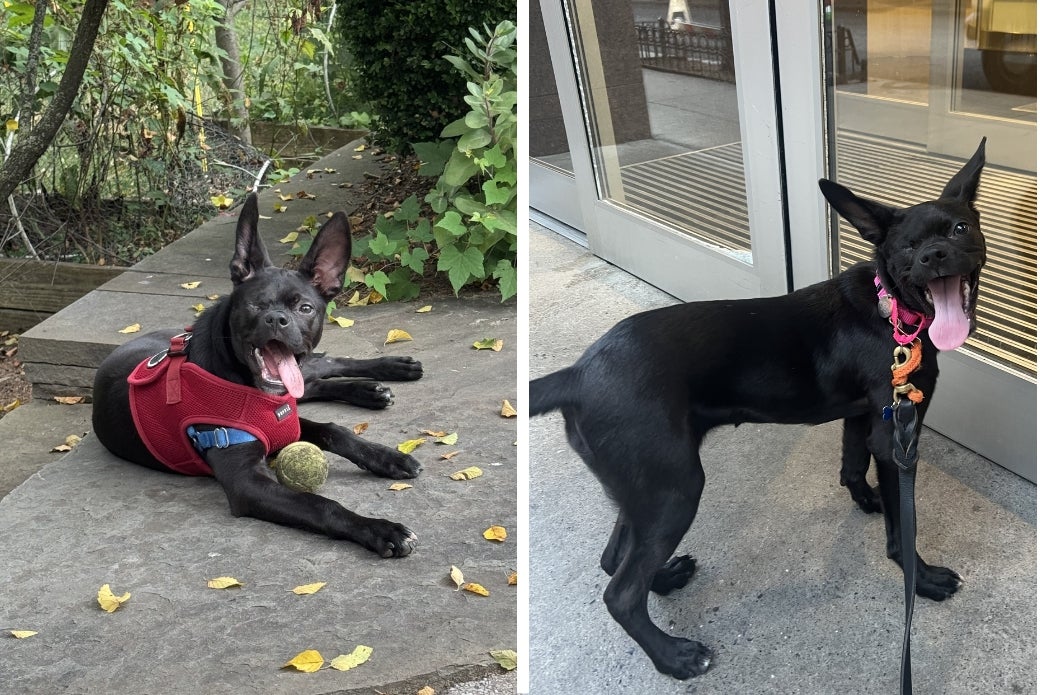
Once she was fully healed up from her surgery, Ava was ready for adoption. Over seven months had passed since she came into our care, and all it took was one meeting with her adopter to make each one of those days worth it. At the end of November, Ava was officially adopted into a loving home.
A Team Effort
Without the massive amounts of specialized care provided not only by the ASPCA, but also by our veterinary partners, Dr. Crowley is certain Ava would not have survived.
“Ava’s care was nothing short of a herculean effort of all teams involved at the ASPCA,” she said. “She was so incredibly sick with parvovirus at the beginning. It involved a lot monitoring on the clinicians’ part. We had to do a lot of exams to see how she was doing and to reassess her. The nursing team are heroes for these dogs. They’re the ones who are there overnight and called the doctors when Ava’s blood pressure got critically low and she needed medication. They’re the ones monitoring her, giving her the treatment, letting the doctors know of all the changes happening, encouraging her to try to eat, giving her the pain meds to keep her comfortable. It was definitely a very large team effort to get her recovered to where she is today.”
But our teams would not be able to provide Ava, or any animal, with the specialized care necessary for their survival if it were not for our dedicated and generous donors.
“Donor support for a case like Ava’s is lifesaving. None of the injuries she faced are easy to treat. Any one single injury would be something that would require intensive work in a veterinary setting. Ava unfortunately had setback after setback and injury after injury,” Dr. Crowley explained. “We were able to provide her with this intensive care and overnight monitoring with all the medications she needed, especially for the parvo recovery. Monoclonal antibodies are a wonderful treatment, but they are not cheap. Thanks to donor support, we were able to acquire that for Ava and it’s ultimately what saved her life.”
Why We Do It
When Dr. Crowley initially took the job of working exclusively on animal cruelty cases, she was shocked to see just how common animal cruelty is and learned quickly how taxing it is to see on a daily basis.
“It’s happening right under our noses,” she said. “I love my job, and I love what I do, but it is hard and it is draining to bear witness to some of the worst behavior that humanity can do to animals. For cruelty to happen to any dog is tragic and awful, but Ava was so young. Everyone thinks of puppies as innocent, loving creatures, and that’s what she was. For her to be so injured, regardless of how it happened, and rather than getting treatment or even dropping her off at a shelter where she could get help, just tossing her out like trash, and not valuing her life as this wonderful companion is really hard for me to deal with.”
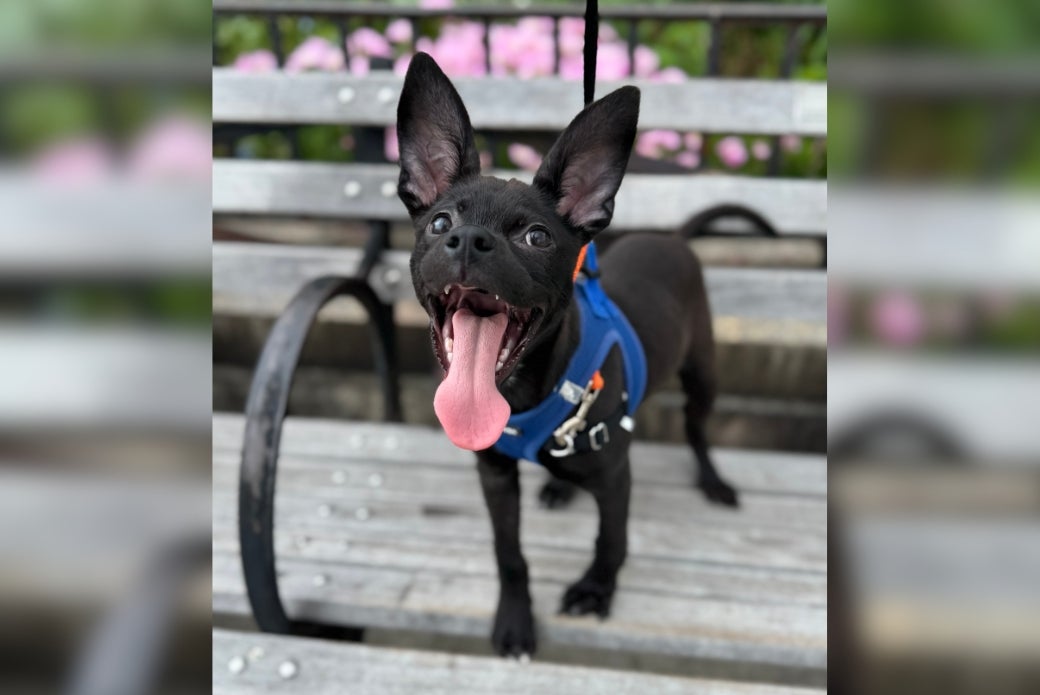
But Dr. Crowley has found the best way to deal with it is to be a part of the recovery story.
“I really cherish watching these animals start to recover,” she told us. “Every milestone they hit makes a difficult job worth doing. Eventually seeing them leave our doors, go into homes, be loved like they should have been and always deserved, that’s the biggest reward for doing this job, even when it’s really difficult, even on those really hard days. I think people here are committed to this cause because they know we can make a difference.
Dogs deserve to be loved as much as they love us. Dogs deserve to have a home with people that cherish them as the unconditional sources of love that they are. Dogs have been by our sides for thousands of years, they are fiercely loyal to humans and they deserve to have that same loyalty returned. Dogs deserve happiness, safety, security and to be cherished and loved and met with patience and understanding.”
Ava has since found exactly that. She is now living in a kind, loving and safe home, being cherished in the way she was always meant to be.
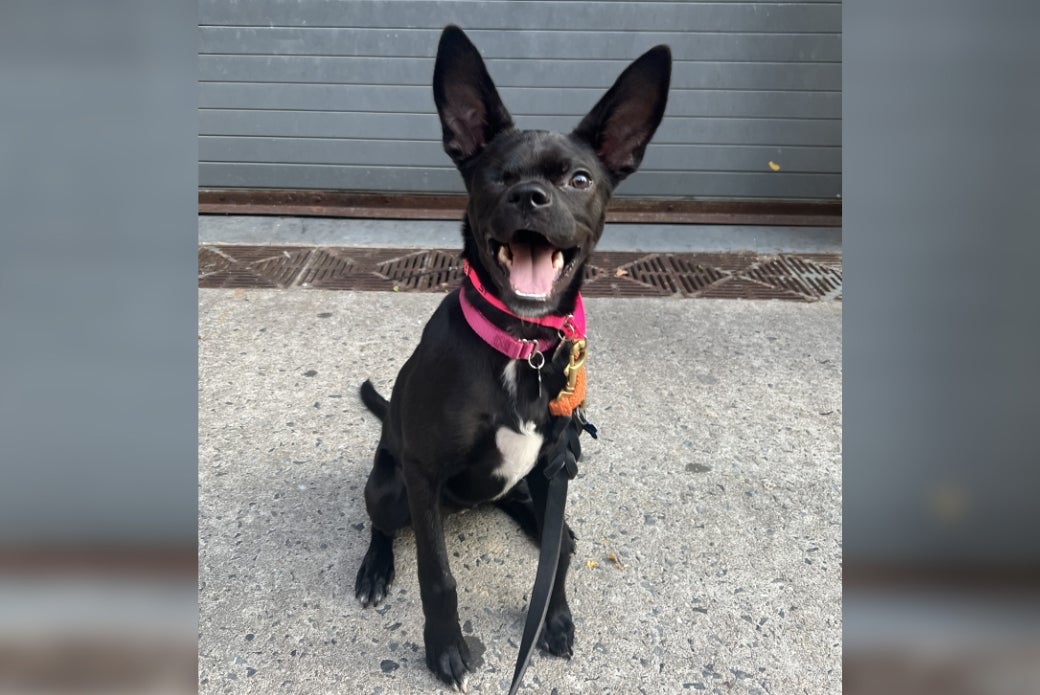
Brie
Brie came to the ASPCA severely emaciated and needed intensive medical care, including two blood transfusions and months of careful recovery before she was healthy enough for adoption. She eventually met Jeff, who was grieving the loss of his longtime partner, and the two began a new chapter together. The generosity of ASPCA supporters helps give animals like Brie the care and time they need to heal and find a loving home.
Read more of Brie's story
On September 19, 2025, Jeff C. received a call that he says saved his life.
The call was from Amanda DeJesus, an ASPCA admissions and placement specialist. She was calling to inform him that he had been approved to adopt a sweet, joyful dog named Brie.
Jeff, who had been in upstate New York at the time celebrating his birthday, says the call couldn’t have come at a better time.
A year prior, Jeff devastatingly lost his partner of 10 years. He had been caring for his sick partner for a while, so when he passed, Jeff was left feeling empty.
“I would sleep the whole day, sometimes two days and then not do anything, not eat. I had no direction,” explained Jeff. “There was nothing for me to focus on. With my character, I want to give love, I want to provide and keep on giving. Without that thing or person in my life, I’m so lost.”
Knowing he had to do something before his depression took hold, he decided that adopting a dog would give him a sense of direction. He went online and applied for three dogs at the ASPCA Adoption Center, one of which was Brie.
“Her smile drew me to her,” remembered Jeff. “I saw a picture and I said, ‘Oh my god, that’s adorable!’”
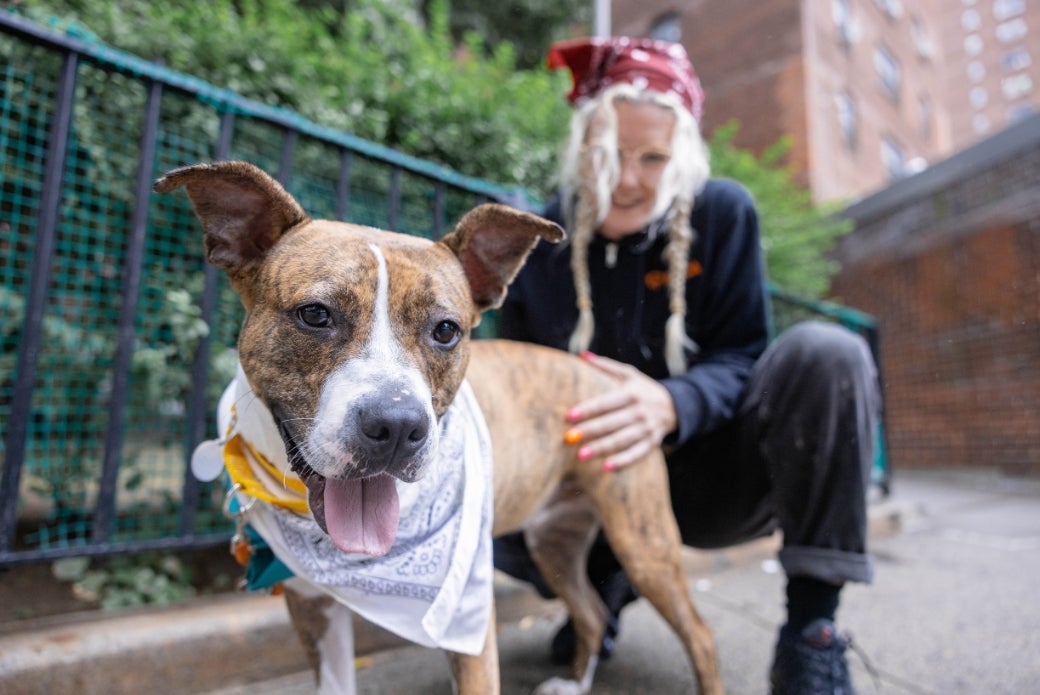
A few weeks later, he received that fateful call from Amanda letting him know he could come to meet Brie.
“The ASPCA gave me this gift that actually saved my life,” said Jeff. “When the ASPCA approved her [adoption] on my birthday, I knew it would change my life.”
But it wasn’t just Jeff’s life that was about to change for the better.
Brie’s New Beginning
At the end of February 2025, the NYPD received a call about Brie, who was found abandoned and severely emaciated. To receive urgent medical care, the roughly four-year-old pup was brought to the ASPCA Animal Recovery Center where Dr. Kovach, the director of veterinary services, oversaw her medical care.
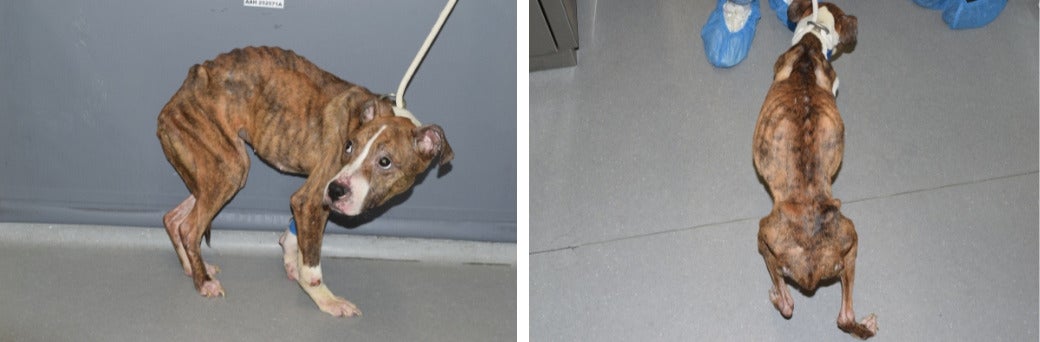
In our care, Dr. Kovach and our other expert medical professionals examined Brie, finding she had pressure sores all over her body.
“Pressure sores are open wounds seen over bony prominences due to lack of fat and muscle covering the bone,” explained Dr. Kovach. “The constant pressure of the bone against the hard ground without the fat or muscle buffer leads to open wounds.”
In addition, Brie was mildly anemic, had low protein and some electrolyte derangements, which are all commonly seen with malnutrition. About a week later, Brie had a dramatic decline where she became very weak, dull and was stumbling.
Our veterinarians determined that she had life threateningly low red blood cells and quickly admitted Brie to the intensive care unit (ICU) to receive blood transfusions.
“It was also noted that she was bleeding in her gastrointestinal tract, which was the likely cause of her sudden drop in red blood cells,” recalled Dr. Kovach. “She required two blood transfusions to get her back to an acceptable level of red blood cells.”
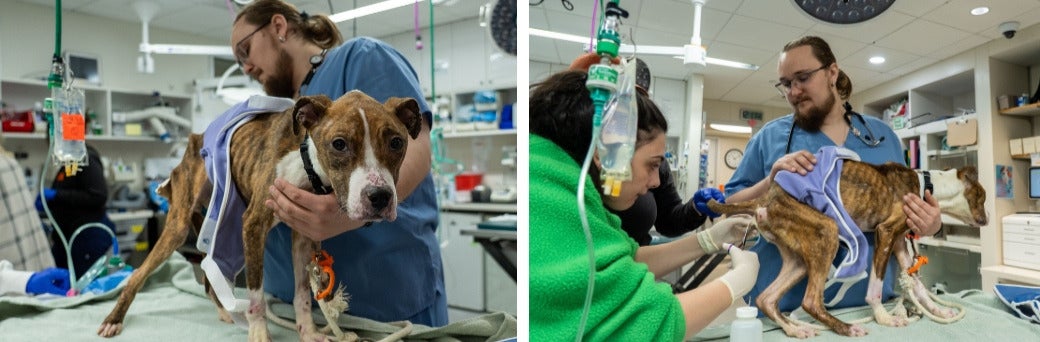
After several days in the ICU, Brie was finally able to transfer back to the Animal Recovery Center.
“She still had a very long road to recovery as she needed to gain adequate body weight and heal her wounds,” said Dr. Kovach. “The malnutrition an emaciated animal suffers from disrupts many bodily functions due to lack of resources, one of which is wound healing. Therefore, wounds heal markedly slower in our emaciated patients.”
To improve Brie’s malnutrition and avoid “refeeding syndrome,” a potentially fatal syndrome that occurs when caloric intake is reintroduced too quickly, leading to dangerous metabolic derangements and fluid shifts in the body, Brie was placed on a refeeding plan. Refeeding plans are designed to slowly reintroduce caloric intake with a goal of maintaining their current weight, not gaining or losing during that period.
Once an animal comes off the refeeding program, they are given plenty of treats and are fed with an initial goal of gaining 20 to 30% of their initial intake weight.
For Brie, it took about three months before she was at a healthy weight. At that point, she was able to undergo her spay surgery and move to the Adoption Center.
“Brie’s transformation from intake to release to adoptions was astounding,” Dr. Kovach reflected. “She had a very high will to live from the jump. She was facing an uphill battle and faced it with fortitude. She was also one of the most gentle and well-mannered ladies that had come through the Animal Recovery Center. She accepted all treatments without fuss and always had love in her eyes. She was a medical staff favorite, and we were all very proud to see her graduate to adoptions.”
Finding Her Kindred Spirit
Now a healthy pup at the Adoption Center, Brie’s zest for life was able to thrive.
“At the Adoption Center, Brie totally blossomed into a new dog,” recalled Amanda DeJesus. “She was very happy, energetic and just glad to be around people. She was so full of joy, her eyes would light up and she would smile really big.”
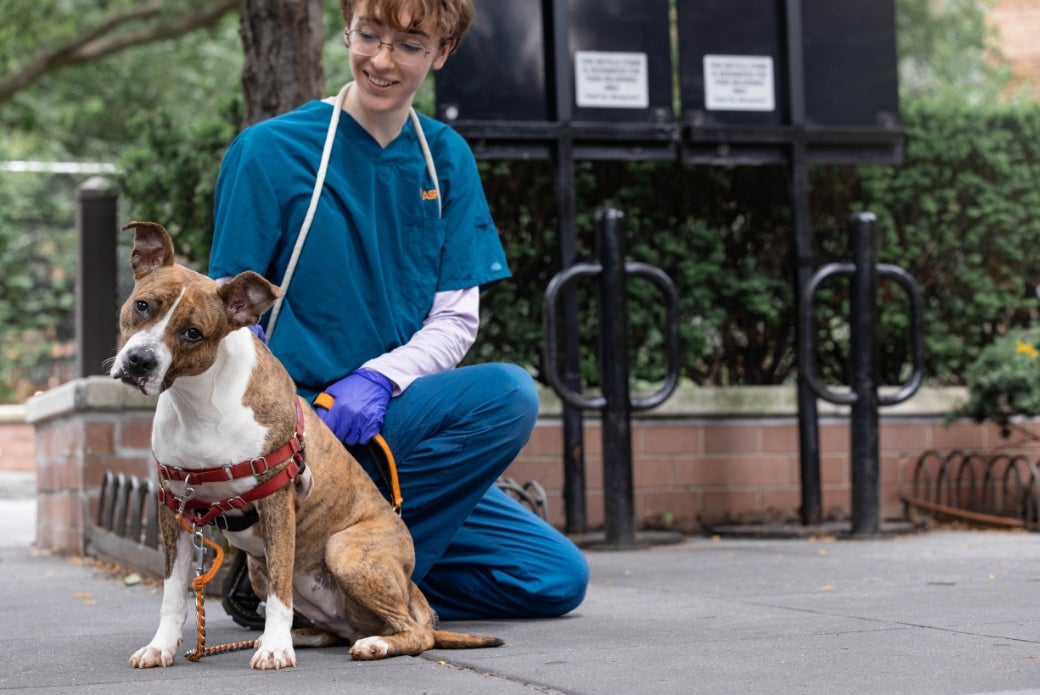
Despite her past, Brie trusted people immediately, falling in love with everyone that walked by her and always asking for pets. She was also very eager to learn — so long as treats were involved!
“Her favorite snack was spray cheese, you could get her to do anything with spray cheese,” laughed Amanda.
Brie’s constant excitement and joy for her second chance at life was incredibly endearing to see but was occasionally too much for potential adopters. Our behavior staff worked closely with her to help her find outlets for her exuberance which greatly helped, but it was important that Brie found the right fit when it came to her new family.
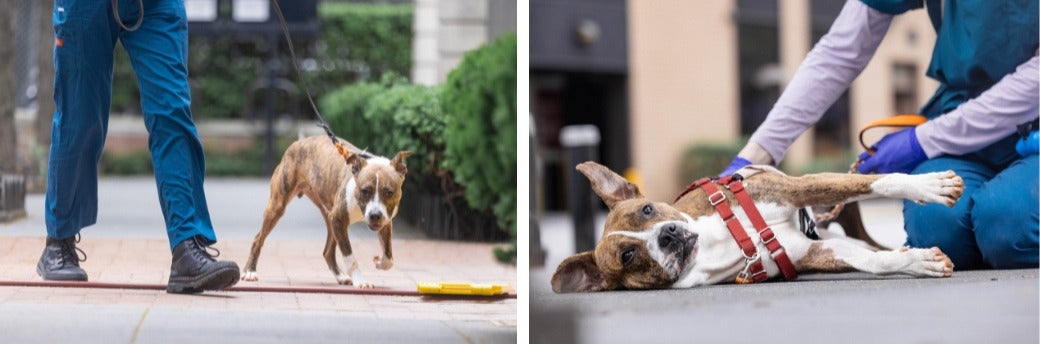
At the Adoption Center, our available animals spend a median of eight days searching for an adopter before finding one. Brie spent over three months looking for her perfect match. But it seems she was just waiting patiently for her kindred spirit, Jeff, to find her.
Love at First Sight
Jeff knew the instant he laid eyes on Brie that she was the one for him.
“It was love at first sight,” he said. “We made eye contact and something clicked. I was like, ‘I’m not going to let you go. You’ll have a home tonight for sure — and you’re not leaving my side. This will be my daughter.’”
“Jeff understood her energy and was also so full of life. It just felt right,” remembered Amanda who facilitated Jeff and Brie’s meet and greet.
After seeing how well the pair immediately meshed, Amanda asked Jeff if he would be willing to take Brie home that same day, to which he emphatically responded, “Yes!”
“It was an honor to take her home,” Jeff told us. “I wanted to be that person to give her a home and give her that security so that she can just lie down and relax and say, ‘I’m home.’ I knew it would be a challenge, but it was nothing compared to the love that she gave me. That love that melts me away.”
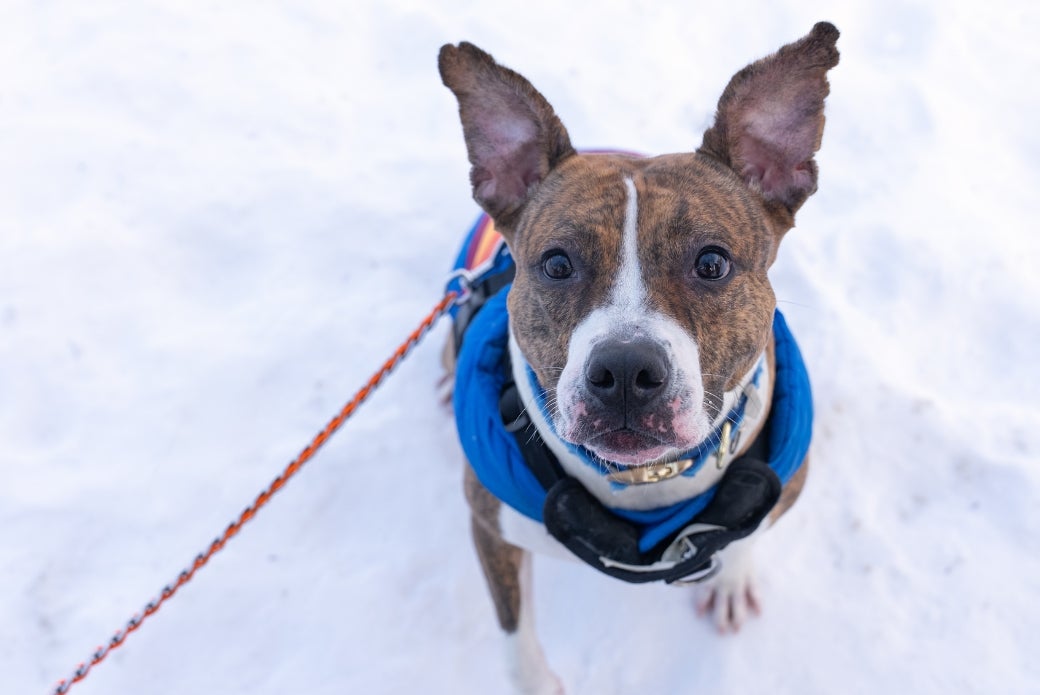
As Jeff prepared to take Brie home, ASPCA staff from all over the building rushed to bid this sweet pup a final farewell after seven months in our care.
“It was really exciting and also very emotional at the same time,” said Amanda. “I always say dogs are really resilient no matter what they go through. Just knowing how Brie came in and the care that she needed throughout her time at the ASPCA, and then seeing her now, just wanting to give all her love and share her excitement with everyone. It’s such a beautiful thing to see. It was really rewarding to help Brie find her home. It gives you a sense of purpose and reassures you that you were made to do this.”
Diving in Headfirst
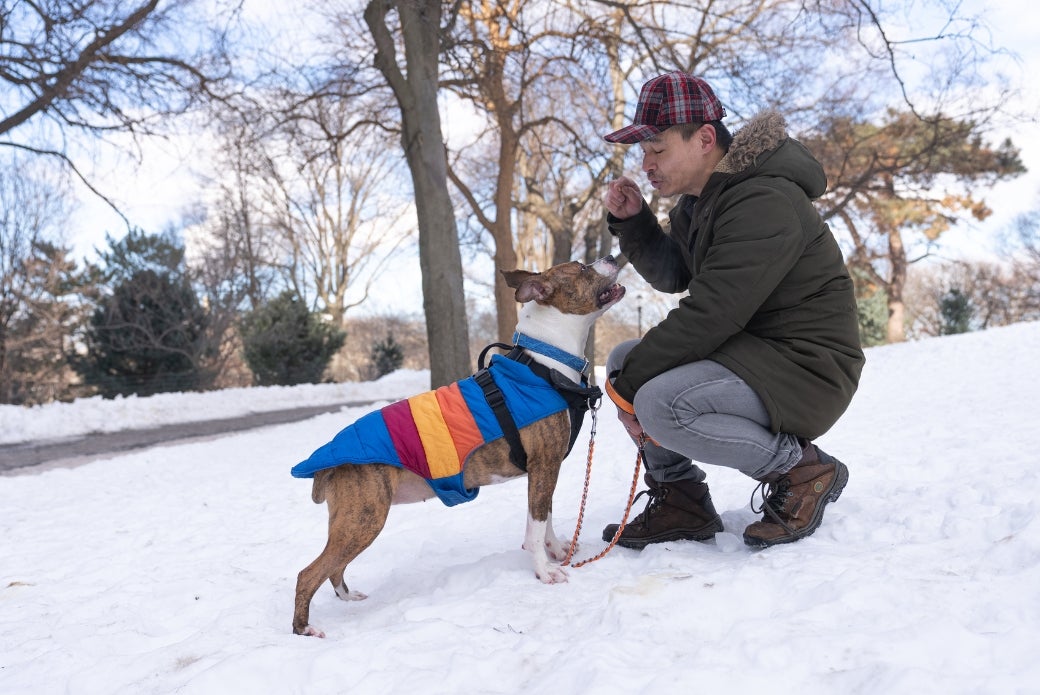
Brie, whom Jeff now refers to as Briana, acclimated to her new home seamlessly. From day one, she was playing with Jeff and snuggling with him on his bed.
Growing up, Jeff often watched shows and movies like Lassie and Benji, instilling a desire to one day have a dog of his own that he could run around and play fetch with. So, finding out that Brie enjoys fetch and playing in the park has been nothing short of a dream for him.
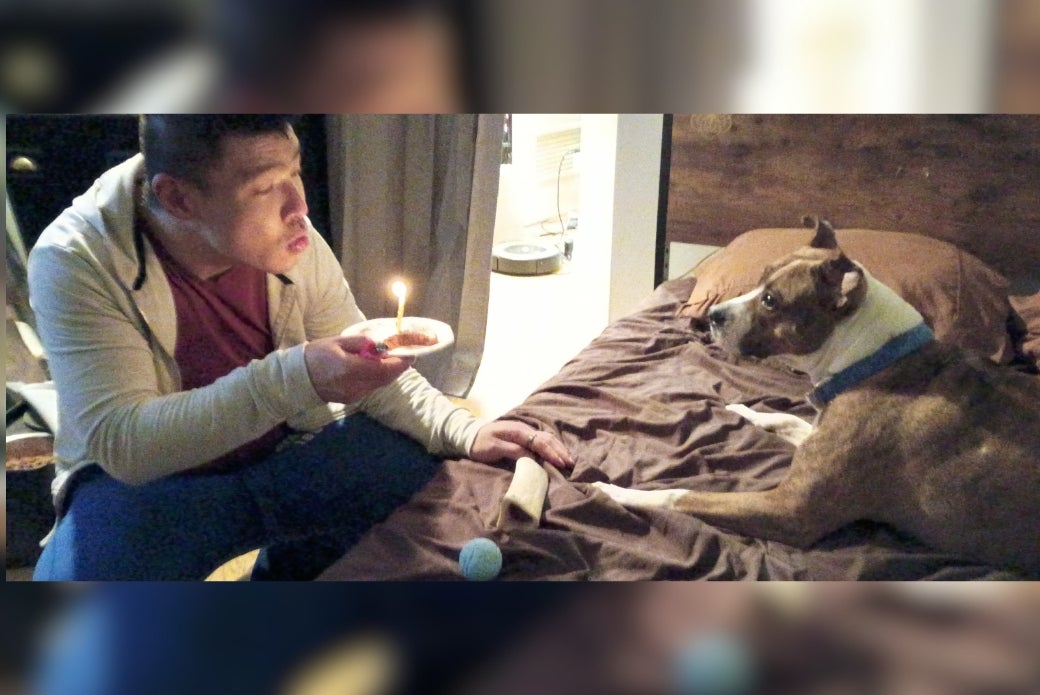
“To finally have my own dog, it’s such a good feeling to have your own family!” Jeff expressed. “I always used to think pet parents who were obsessed with their dogs were so weird, but I get it now. The way they dress up their dogs, I mean now I dress her up! I got a sewing machine so I could make her a costume. She’s my kid.”
In addition to playing and dressing her up, Jeff loves that Brie is always there for him when he comes home.
“That’s the best part of it. The best part is that when you go home, someone is waiting for you and so happy to see you,” he said. “It’s not every day that happens to me, that someone’s happy to see me. But she is, she’s always happy to see me. That’s the best thing you can get from any pet.”
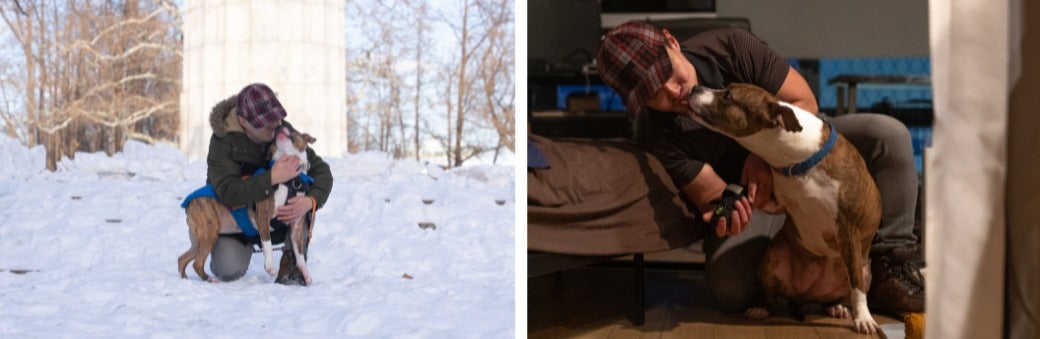
In fact, Jeff likes coming home to Brie so much that he tells everyone she has separation anxiety!
“I cannot leave her alone. I tell everyone she has separation anxiety, but no, it’s me, I’m the problem,” Jeff laughed. “I get anxious when I leave her behind. And all she does is sit on the couch and sleep, she doesn’t rip things, but I can only leave her for two hours and then I get anxious. Not the dog, me!”
Jeff is even planning to buy Brie a cart to sit in so he can take her to the beach this summer.
“I want to bring her with me everywhere I go,” he told us.
Mending a Broken Heart
For Jeff, adopting Brie wasn’t just about finding a pet, it was about finding a sense of purpose and a new spark of joy.
“Before Brie, there was nothing. I didn’t look forward to waking up the next day,” said Jeff. “Death, for me, is such a big deal. I also lost my mom. I felt like everyone was leaving me. And then I got Brie and it was more than words. The loss I experienced is hard, and it’s hard to move on. But Briana is teaching me to move on. She helps me focus not on death but on life.”
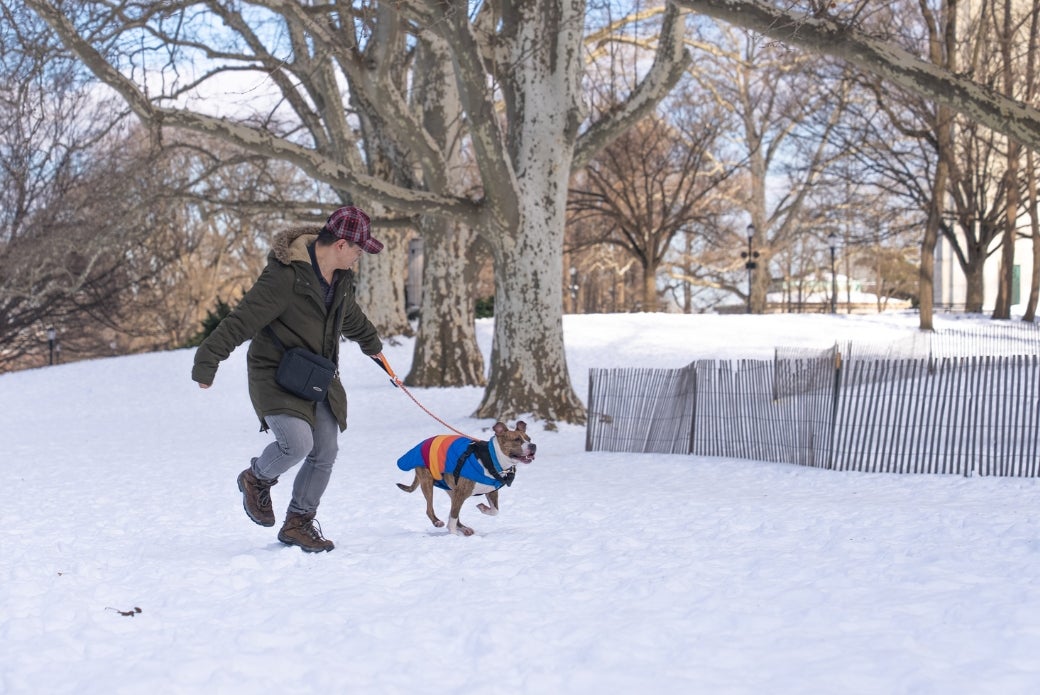
“When she wakes me up and she cuddles with me, it’s a warm feeling. A feeling that someone is there and waiting on you and loving you,” Jeff added. “And I get to be a dad! I feel like what I’m doing is making a living thing happy. It makes you want to improve more and step up every day. I want to work and earn money for her; I want to buy her more toys, to keep spoiling her. She pushes me to be better. She’s a constant in my life and I thank the ASPCA for giving that to me.”
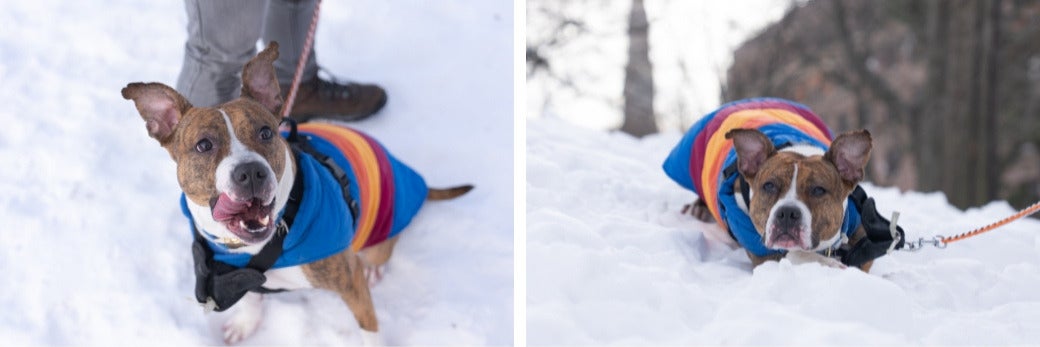
In Jeff’s mind, the only thing that would make his life with Brie even better is if she had gotten the chance to meet his partner.
“He encouraged me to get a pet,” Jeff explained. “He would love Brie. I wish he could just see her, play with her, it would be a nice picture to see.”
Drawing Parallels
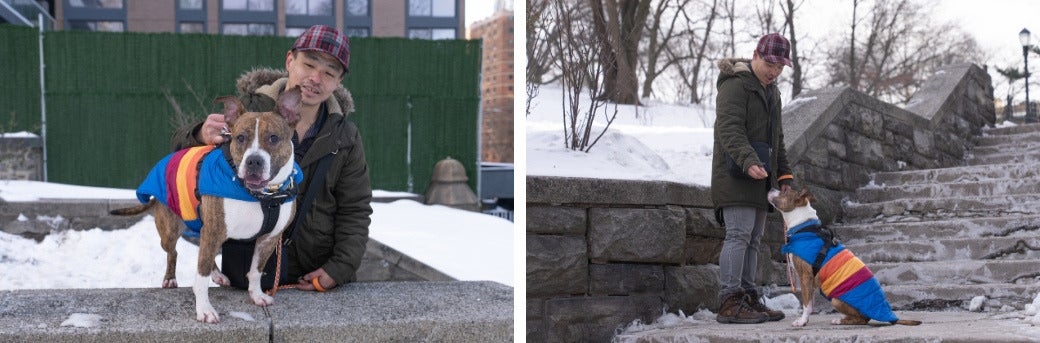
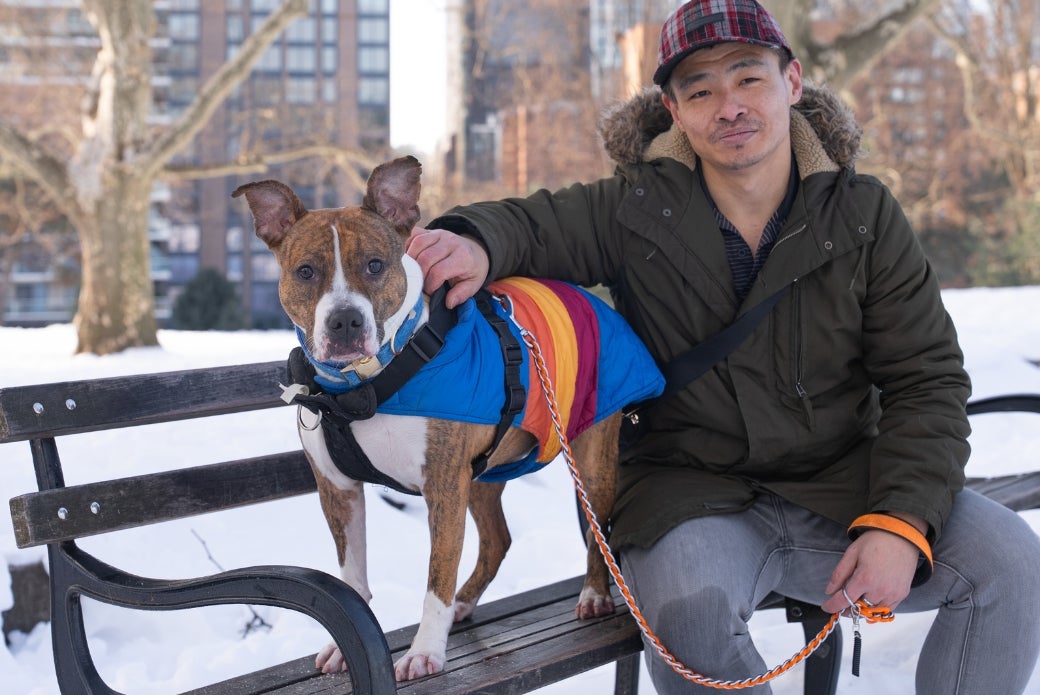
It’s hard to look at Brie and Jeff’s journeys and not see the incredible similarities between the two, going from a life of heartache, to searching for someone to take a chance on them, and then finally falling head over heels in love.
“Her journey from bad health to good health and my journey from depression to getting better is synchronized. We took the same steps. It’s amazing that a dog can actually pair with your life. The moment I saw her, I knew I wanted to make her life better, and I knew she would make my life better,” Jeff told us. “I’ll do my very best to take care of her. She’s family. She’s counting on me to take care of her — what else is there? As long as I’m able to make her life better, happier and healthier, for me, that’s enough.”
“I thank the ASPCA for being there at her lowest, before anything worse happened to her. Not every dog that is suffering gets saved and not every dog gets a home. But the ASPCA saved her, and I’m glad I get to be that good home. I get to be the good part.”
Help More Animals Like Brie This ASPCA Giving Day!
Making a journey like Brie’s possible relies on so many people, from our medical staff who saved Brie’s life, to our behavior team who worked to get her ready to find a home, to our integrated care team who took Brie on walks and cleaned her kennel to our admissions and our placement team who found Brie her perfect match. Yet none of this lifesaving work would be possible without our supporters and donors.
Dina
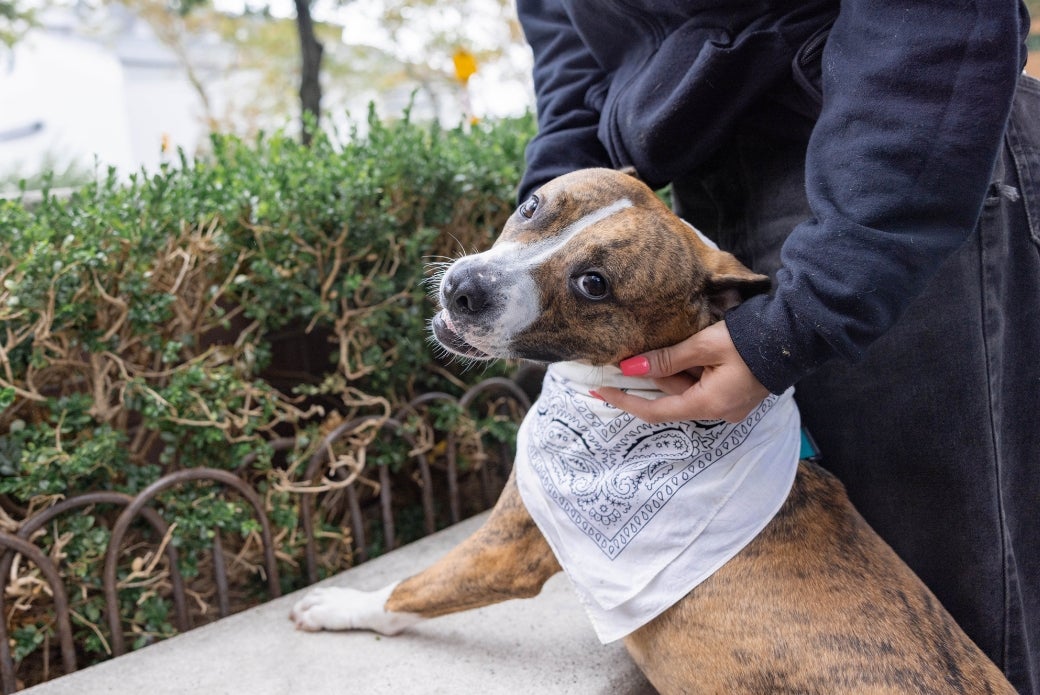
Dina was found tied to a tree in Queens, severely underweight and in need of medical care. After treatment, careful refeeding and behavioral support through the ASPCA, she regained her health and eventually met Barie Lynne and her family. The care supporters help provide gave Dina the time she needed to recover before she was ready to go home.
Read more of Dina’s story
After saying goodbye to their 14-year-old Dachshund, Kippy, last October, Barie-Lynne R. asked her family, “How are we going to live without a dog?”
“There were no more daily walks,” said Barie-Lynne, who had adopted Kippy from Start II Animal Rescue in Englewood, New Jersey, 10 years before. “I had no reason to go anywhere. It was difficult. Having a dog is an essential part of our family.”
In January, Barie-Lynne, who lives in the Riverdale area of the Bronx, and her five adult children began their search for a new dog.
“Everyone realized it was a real loss,” she says. “We needed a dog in our home.”
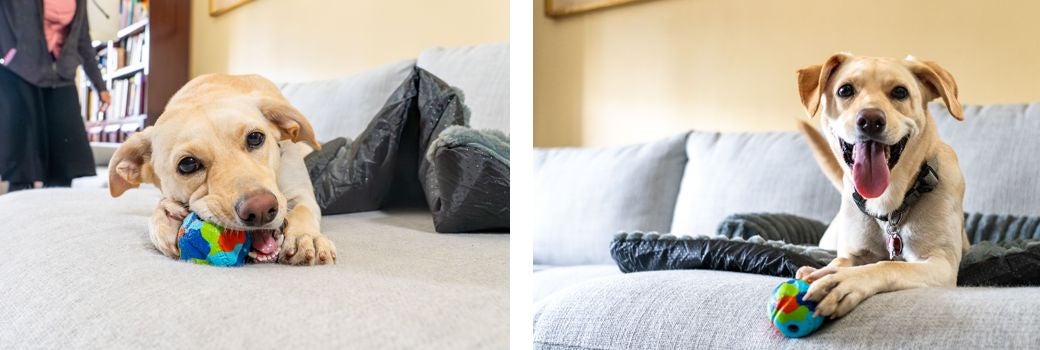
Even her son, A.Z., who lives overseas, weighed in, “because he wants a dog here when he comes back,” Barie-Lynne says.
Her daughter, Surie, a volunteer at the ASPCA Adoption Center, told her mother about a dog named Dina.
“Surie walked Dina routinely, and told me, ‘I think you should meet her,’” Barie-Lynne says. “After her walk, she told me Dina cried when she had to go back into the shelter. Of course, that tugged on my heartstrings.”
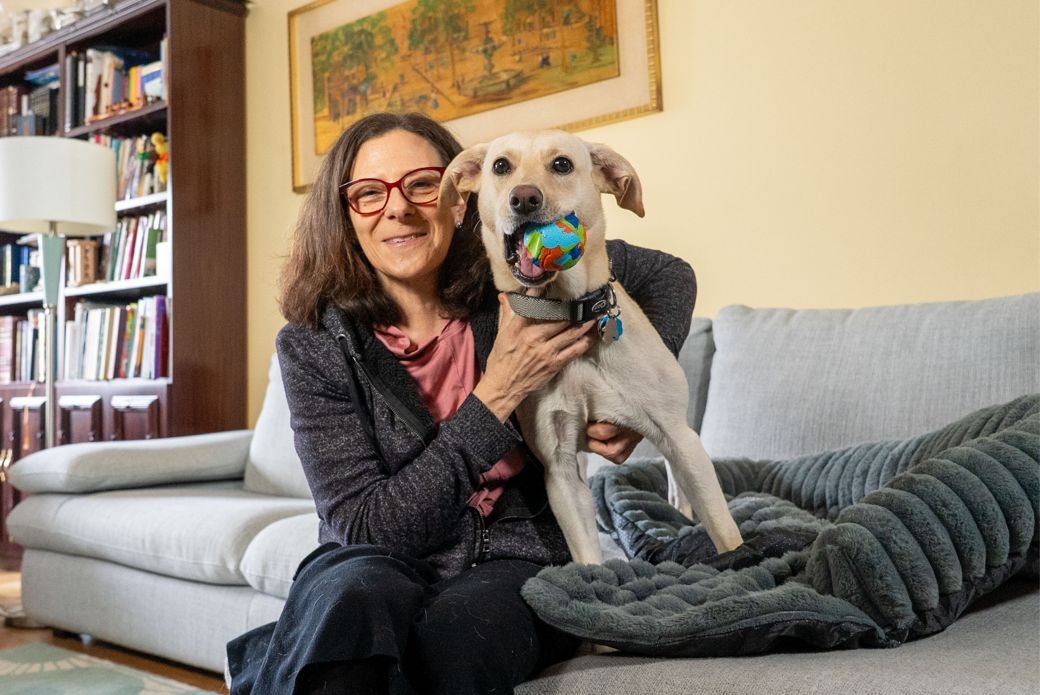
Barie-Lynne’s next question was, “When should we adopt?”
Another daughter, Rifky, answered, “Mom, every night we don’t adopt is another night they have to stay in the shelter.”
Rifky’s response inspired Barie-Lynne to act sooner rather than later.
Rescue & Refeeding
Late on the night of October 23, 2025, an NYPD lieutenant found a young dog tied to a tree in Baisley Pond Park in Jamaica, Queens.
The lieutenant took the emaciated dog, who appeared to be a Labrador Retriever-mix, to the Veterinary Emergency Group in Brooklyn, an ASPCA partner clinic that accepts animal cases during hours when the ASPCA is closed.
The following day, the dog was transported to the ASPCA Animal Hospital.
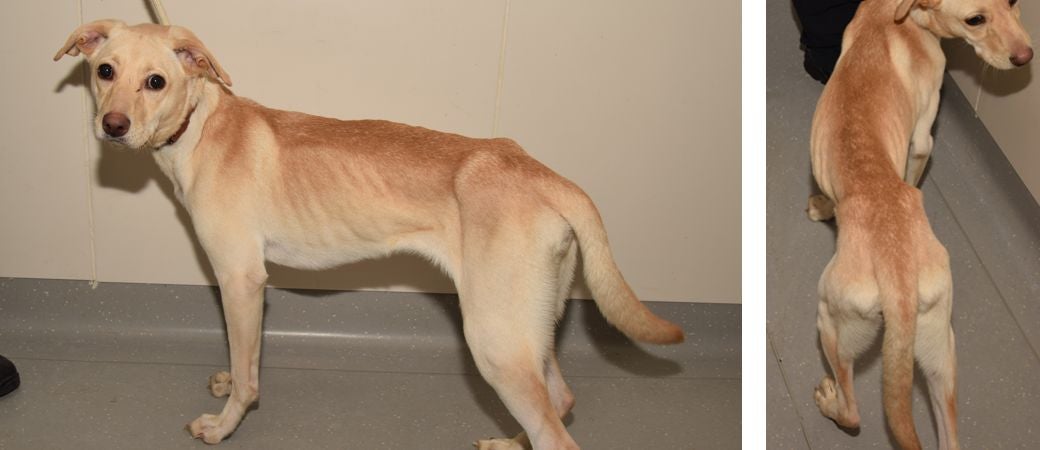
Estimated to be 10-12 months old, the dog, called Dina, weighed just 26 pounds. Dr. Robert Reisman, the ASPCA’s supervisor of forensic sciences, conducted her initial examination and recalls that “she was weak from loss of muscle mass and mildly dehydrated.”
Dina tested positive for hookworms and was treated for parasites. She also received antibiotics for a urinary tract infection.
Without any video or microchip to link Dina to a possible owner, her case was closed. But Dina had a long way to go toward recovery. She was placed on a re-feeding diet, a routine step for underweight dogs to manage the transition from “survival metabolism” — using their own body tissue for nutrition — to a normal metabolism in which food can be ingested and absorbed.
Dina’s diet was provided in small meals three times a day. After eight weeks, Dina weighed 36 pounds, a 38% increase from her intake weight. “This is far in excess of what a dog her age and size would normally gain,” Dr. Reisman said. “But her growth was compensatory; she had to make up for the period when she suffered from long-term inadequate nutrition.”
Road to Recovery
On November 13, Dina was transferred to the ASPCA Recovery & Rehabilitation Center in Pawling, New York, a new facility dedicated to treating canine victims of abuse and neglect. Dina, who could be shy and was often stressed in her kennel, healed in an environment that offered regular play groups and oversized kennels with outdoor access.
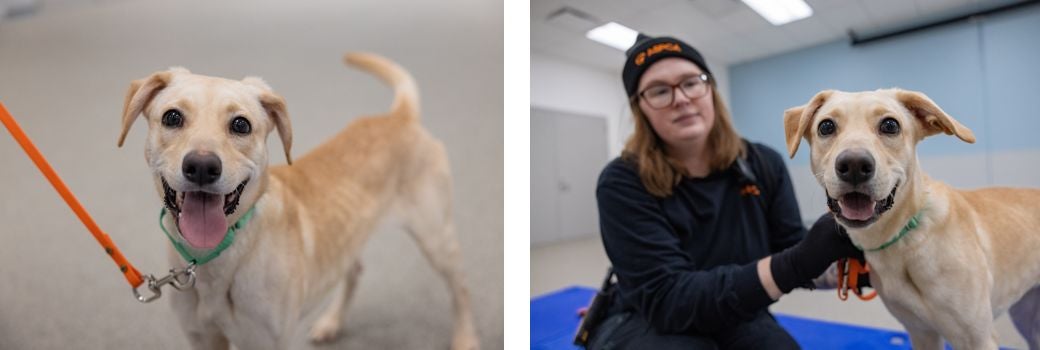
Kaitlin Cheek, senior manager of animal behavior, spent time with Dina daily, typically during playgroups or office time.
“Dina enjoyed her toys and making new dog friends,” says Kaitlin. “She also loved spending time with people.”
Kaitlin notes that Dina was an “exuberant” greeter in her kennel, jumping and barking excitedly whenever people approached.
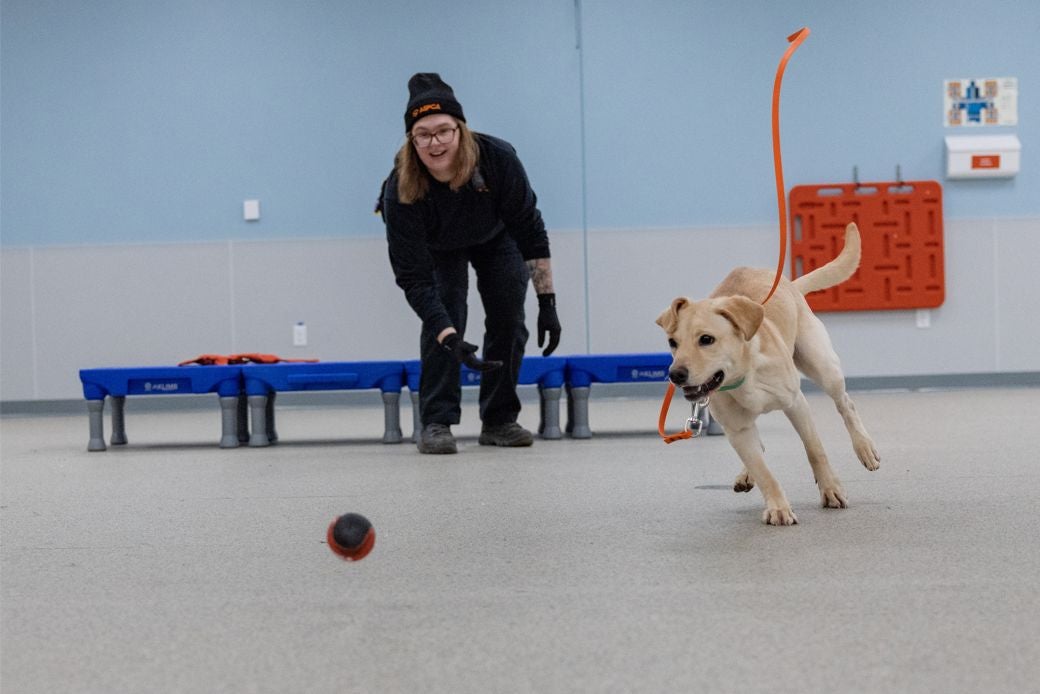
“We worked hard to reinforce keeping all four paws on the floor and not barking,” Kaitlin explains. “When the weather permitted, we took Dina outdoors, where she loved to chase other dogs and be chased.”
Dina was spayed on December 10 and transferred back to the ASPCA Adoption Center on January 6, 2026.
An Adoption Ambassador
After applying to adopt Dina on Wednesday, January 14, Barie-Lynne spoke with Alex Casiano, an admissions and placement specialist.
“I love all of our pups, but Dina definitely has a special place in my heart,” says Alex, adding that Dina warmed up quickly to him and his colleagues and tolerated being dressed in a pink tutu.
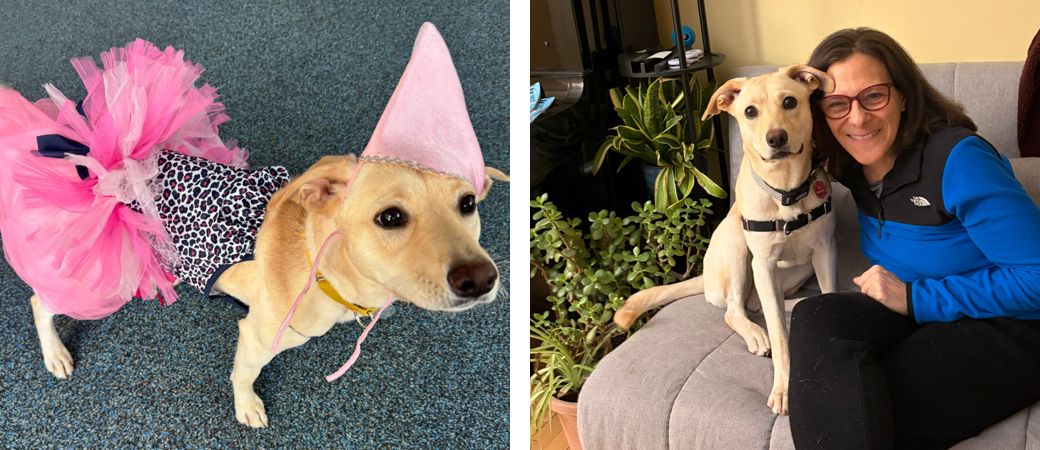
Barie-Lynne, who adopted Dina on January 18, seconds Dina’s good-natured behavior.
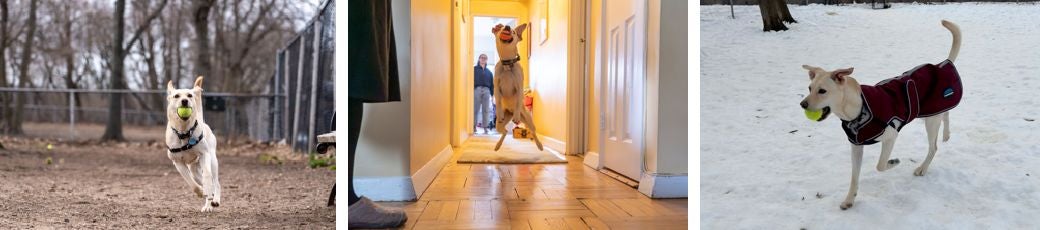
“She loves our dog run at Seton Park,” she says. “Everyone knows her.”
Now close to 50 pounds, Dina is “much happier and more filled out.
“She’s still that ball of energy we were told she was going to be, but she’s settled in and calmed down,” Barie-Lynne says. “As soon as I adopted her, I was walking and meeting people again. Dina is proof that there are some really great dogs at shelters and rescues.”
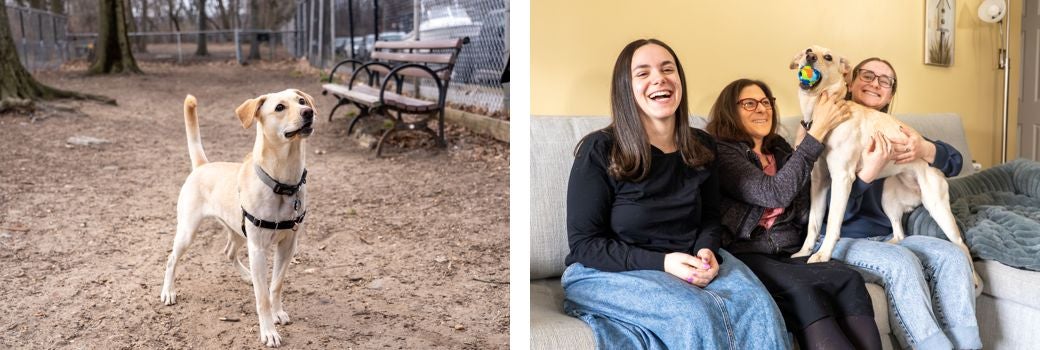
Her family echoes her sentiment.
“Mom always said, you don’t shop for a dog,” Surie says. “You go to the shelter and see which dogs are there, which ones need a home. Adopting was always a big part of us having a dog.”
Says Rifky, “Having a dog emphasizes the importance of putting others before yourself. We always make sure our dog is fed before we eat dinner. When Dina needs to go for a walk, even if everyone’s busy, someone will make time to take her. She’s a great addition to our family.”
Oliver
Pulled from the streets of rural Mississippi with his sister, Oliver was one of thousands of animals helped through the ASPCA’s Animal Relocation Program. He traveled to New York as part of a milestone 100,000th transport and was quickly adopted. Now living in Miami, he’s thriving with a loving family and a life filled with beach days, toys and long walks.
Maeve
Maeve came to the ASPCA with severe burn wounds on her back, chest and legs. She was fearful and in pain but thanks to expert medical care, gentle fostering and lots of patience, she began to heal. Her resilience and spirit shine in her new home where she is now cherished, protected and as her family says, “the queen of the castle.”.
Read more of Maeve’s story
When Alex M. went for a jog one day, he came across a group of ASPCA dogs on a walk and was inspired to check our website to see who might be available for adoption. Little did he know, this thought would soon change the life of one sweet little dog who was in need of a second chance.
While browsing online, Alex and his wife Heather came across Maeve, a 3-year-old Chihuahua who was wearing a costume dinosaur hood in one of her photos.
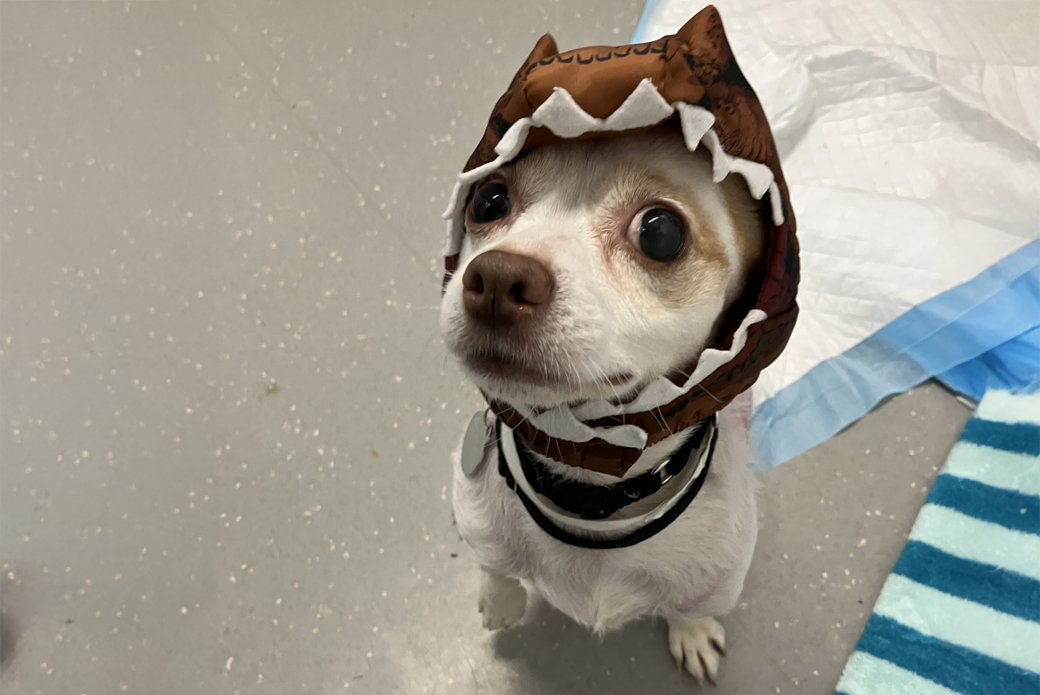
“We thought there’s no harm in calling the ASPCA; there’s no commitment for us to have the phone call,” remembered Alex. “So, Heather and I were out at lunch, and we had a phone call with a representative from the ASPCA who told us about Maeve’s backstory—which we had no idea about. It went from, ‘Oh there’s no commitment when you just have a phone call,” to immediately having our hearts melted and thinking, ‘We need to meet this girl and hopefully bring her into our lives.’”
A Painful Past
Early in August 2024, the NYPD found Maeve abandoned with severe and suspicious burns covering her back, arms, shoulders and chest. For such a small dog, these burns covered most of her body, and our teams knew she needed immediate care.
“Maeve was in a lot of pain when she came to us, so she required several days in our intensive care unit (ICU) just for pain management,” remembered Erica Barbot, director of the ASPCA Animal Recovery Center (ARC), a facility located in New York City which is dedicated to providing lifesaving veterinary care, behavioral assessments and treatments for dogs and cats, many of whom are victims of neglect or cruelty. “Her wounds were quite severe, and she was really hesitant to being handled at all because of the pain she was experiencing.”
Maeve was not only enduring severe pain from her burns but was displaying what our team refers to as “anticipatory pain.”
“She had associated handling with pain at this point because of the severity of her wounds,” said Erica. “She was giving us all the signs of saying, ‘I’m in pain, please don’t touch me. Please don’t hurt me anymore.’”
Our medical staff got to work immediately on Maeve, covering her in bandages and changing them multiple times a day to heal her wounds.
“Little by little she started to form bonds with the folks who were delivering her primary care and started to change her associations with touch from pain to more friendly associations instead,” explained Erica. “Our medical and ICU teams started being able to do more with her without her reacting so severely and without her crying out in pain. Over time her friend group grew, and she allowed more people to handle her more consistently.”

After nearly two weeks, Maeve no longer required extensive pain management and was finally cleared to be moved from our ICU to our shelter environment at ARC. Here, she was housed in Erica’s office as she needed a bigger space to settle in.
“I knew she was a sensitive girl who needed a little bit of time to make friends, so she came into my office, and I ignored her,” Erica laughed. “I let her approach me and did some baby talk. I was really happy to see that she approached me right away and nudged my hand for pets and when I’d stop, she’d continue to nudge my hand for pets. She was giving me all the signs to say that she was comfortable with me touching her and handling her. She had come such a long way already.”
Once Maeve had mostly healed from her wounds, it was determined that she wasn’t going to have much hair growth in the affected area. That skin would now need additional sun protection during walks and while in direct or indirect sunlight.
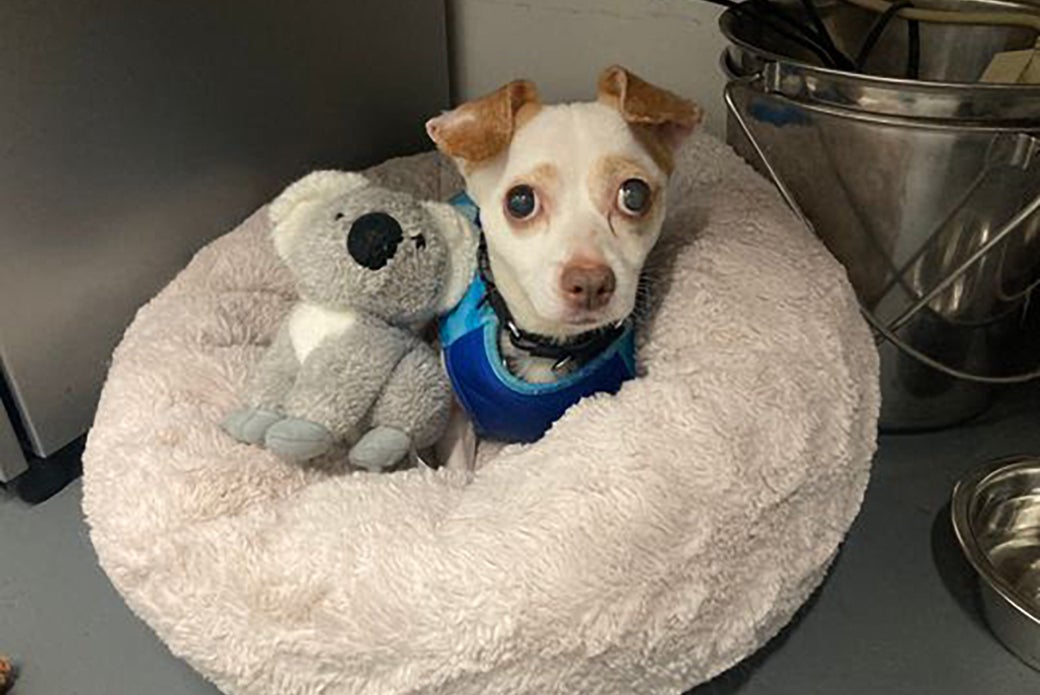

“We ordered her a UV shirt that she had to wear,” Erica told us. “She wasn’t a fan of it at first. That type of shirt is made to go over Maeve’s head and for her, that was scary.”
Wearing the shirt would now be a lifetime requirement for her skin condition, so our behavior team at ARC worked hard with Maeve to desensitize her from having the shirt put on.
“It was critical to her next step in moving to foster and then into adoption,” said Erica.

With time, patience, lots of treats and dedicated staff, Maeve became a pro at getting her shirt on, giving confidence to Erica and the rest of the ARC staff that she was ready to move into a foster home.
For Maeve, the goal of going into a foster home was to see if she could form bonds with new people and allow those people to help her with daily tasks, like putting on her UV shirt and applying ointments.
Thankfully, we found just the person to help.
A Dedicated Foster Caregiver
Carly M. has always loved dogs and being able to give back to the community, and while she’s not at the stage in her life where she can adopt a dog, she finds that fostering is the perfect solution.
“Knowing that there’s an opportunity to give a dog a temporary home and to create a loving environment so that wherever they end up next it’s an easy transition and they can go be someone else’s dog for life – it’s really rewarding and makes me want to continue fostering,” said Carly. “It brings me joy.”
 Carly M. and Maeve as they reunited at the ASPCA Adoption Center following Maeve’s adoption.
Carly came across Maeve in an ASPCA email stating that she was looking for a foster home where she could heal.
“I had read about her injuries, but it wasn’t until I came to the Adoption Center, and they let her off the leash to run around the room that I saw the extent of her burns,” remembered Carly. “But I didn’t care. For me, I just wanted to cuddle her and pick her up.”
Leaving our facilities was a big, scary change for Maeve, who sadly shook during the whole ride home. Fortunately, things began to turn around quickly.
“As soon as we got home and I let her off her lead—she still had her UV shirt on she didn’t even let me take it off—she just raced around the apartment, got into every little corner, sniffed it all out and then just jumped right up on the bed and made herself at home. She laid on her back asking for belly rubs,” Carly told us.

That day Maeve became “queen of the castle,” taking majority spot on the bed and guarding the door.
“Any sound and she’d race to the door to be on protector mode. That was interesting because it was almost as if she was the protector even though I felt like I was the one who needed to protect her. She has a very big, bold personality and isn’t fearful of anything,” said Carly.

Within just two short weeks together, Maeve once again made impressive progress and proved to be ready to find a home to call her own. Just two days after being made available for adoption Alex and Heather inquired about Maeve.
A Family of Her Own
In late October, after a few emails and a Zoom call, Alex, Heather and their resident dog, Buttercup, headed to the Adoption Center to meet Maeve.
“It was kind of like meeting a celebrity that day because we had seen her photos online and were talking about her for a couple of days,” recalled Alex. “I remember seeing her in the lobby with Carly and thinking, ‘Oh my goodness that’s her!’ It really was like a celebrity sighting.”
After a great first meeting, Alex and Heather were able to bring Maeve home that same day, where they finally introduced her to their sons who had been begging for another dog.

Many pet parents choose to change their pet’s name after adoption, but Alex and Heather decided to stick with the name Maeve.
“When we looked up the meaning, it means like fierce warrior queen, and we just thought it suited her,” said Heather.

When Maeve arrived at her new home, she fit in seamlessly, quickly showing off her big personality.
“She totally has little sister energy,” said Heather. “When she first came in our other dog was a little territorial but then very quickly Maeve was like, ‘I own the place.’ She is the queen of the castle for sure. She’s super sweet but if I’m petting Buttercup she’ll come over and growl for attention.”
Despite being the classic younger sister, Maeve and Buttercup are best friends and spend most of their days curled up on the bed sleeping. However, when it comes to eating, Maeve once again shows her bossy personality.

The couple feed both their dogs at the same time but have to feed Maeve in her crate.
“It’s the only way to ensure that Buttercup gets a full meal because Maeve will scarf down her food,” laughed Alex.
“Maeve will run over, and Buttercup will just step aside and let her have whatever Maeve wants,” adds Heather.

Not only is Maeve best friends with Buttercup, but she’s friendly with all other dogs.
“She’s very easy to take on walks because she’s so friendly with everyone that walks by,” said Alex. “Since she has to wear a covering regardless of the weather, people are always noticing and commenting on her outfits.”
To date, Maeve has nearly 30 sweaters and shirts, and special holiday outfits too!
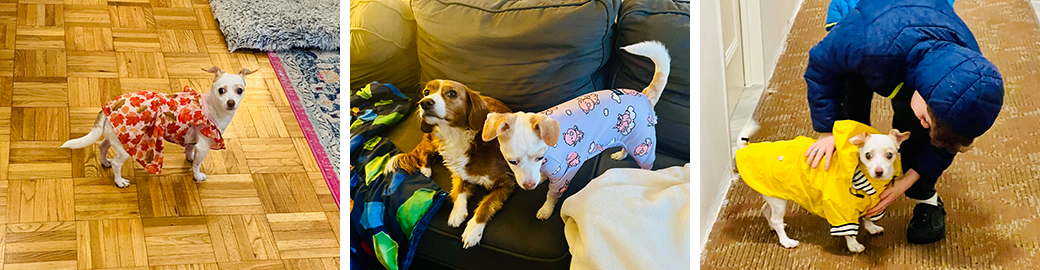
In addition to her coverings, Alex and Heather apply doggy sunscreen to Maeve’s skin in order to keep it healthy.
When looking to adopt a dog, it never crossed the family’s minds that they would adopt a dog with medical conditions like Maeve.
“But we just adored her right away and were like, ‘Well, this is what she’s coming to the table with, and we’ll take care of her!’” Heather told us. “I can’t imagine not having her and it’s been really wonderful to see our boys really grow to love Maeve so quickly,” she adds. “They’re so sweet with her. She’s really completed our family—although now our younger son is asking for one more.”

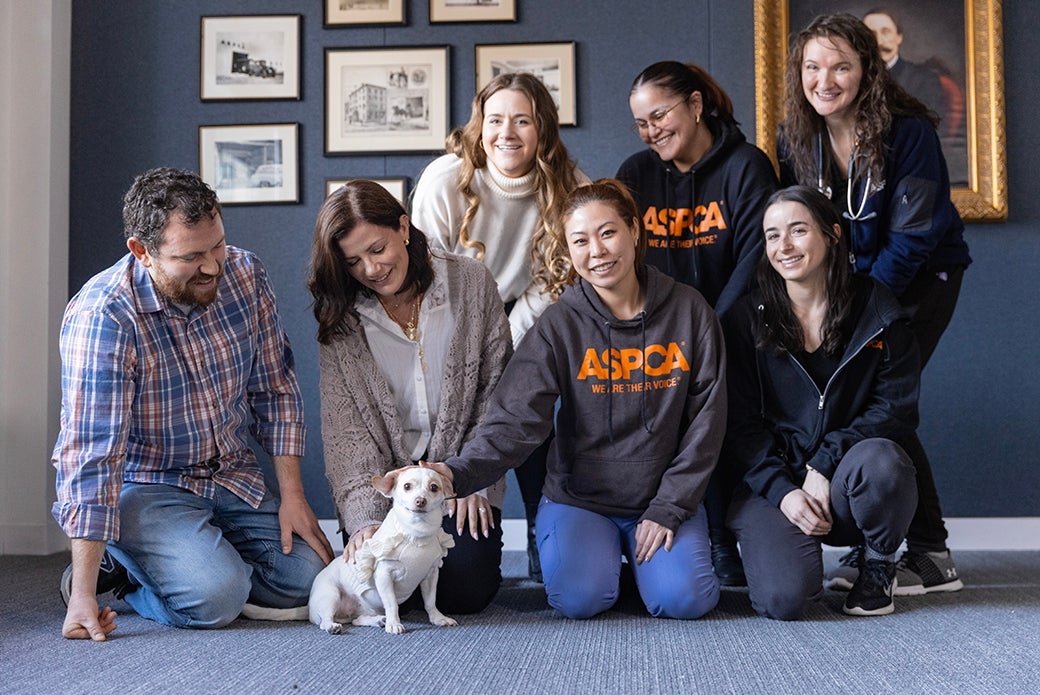

“The ASPCA has made it possible for us to bring Maeve into our lives, which has made our lives richer,” said Alex. “She’s a new presence and a new family member for us to love. It has brought a lot of joy and love into our family.”

Ginny
The victim of a dogfighting ring in the Bronx, Ginny was found scared and shivering in the cold. Every small sound and everyday experience frightened her, but with the help of the ASPCA and the love of her new family, she has been transformed.
National Relocation Program
Our team currently relocates more homeless animals than any other organization by working with overcrowded shelters in under-resourced areas of the country to relocate their animals to other shelters where they have greater chances of being adopted.
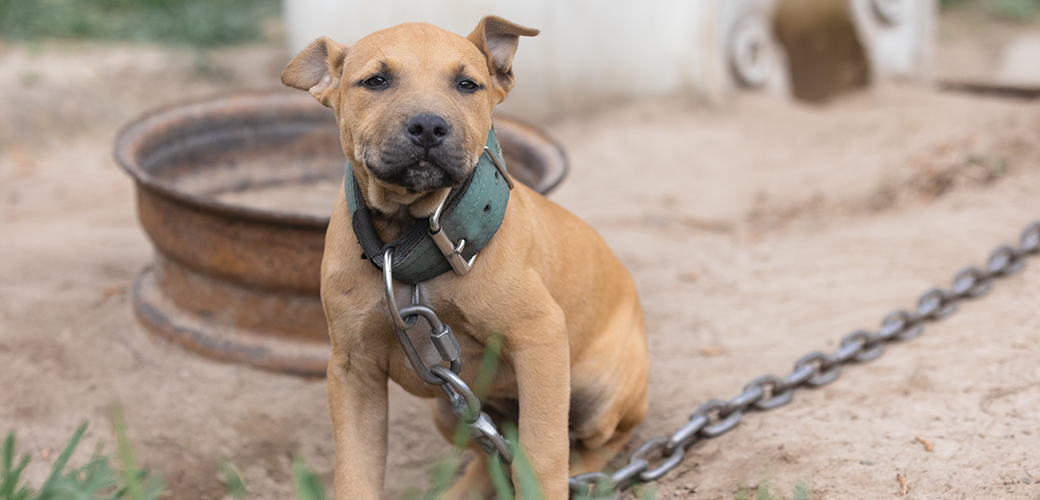
Dogfighting Rescue in South Carolina
In partnership with South Carolina authorities, the ASPCA rescued more than 150 dogs from a suspected dogfighting operation spanning 10 locations. This is one of several large-scale dogfighting cases the ASPCA has responded to in the past year, as we continue working with law enforcement to end this brutal form of cruelty.
Read more about this rescue effort

In April 2025, we partnered with the South Carolina Law Enforcement Division (SLED) to remove more than 150 dogs from 10 locations across Dillon and Marion counties. The dogs—many of whom were observed with untreated injuries and scarring consistent with dogfighting—were transferred to one of our facilities, where they received critical care.

This is just one of seven suspected dogfighting cases we have assisted law enforcement with in the past year, which also included:
- A suspected dogfighting case in March 2025 involving dozens of dogs, including puppies, removed from a property in Luzerne County, Pennsylvania.
- A suspected dogfighting case in Pinellas County, Florida, in August 2024, which resulted in the rescue of more than 100 dogs. For this case we provided subject matter expertise, legal support and conducted veterinary and behavior forensic exams on all the dogs to support the investigation.
- Assisting SLED with the execution of multiple dogfighting-related search warrants across South Carolina in 2024. In addition, we assisted dozens of investigations supported with forensic, investigative and legal support from our subject matter experts.
Over the last year, we’ve assisted nearly 350 dogfighting victims across multiple states. That’s why in honor of National Dogfighting Awareness Day on April 8, we wanted to take a moment to acknowledge the incredible dogfighting survivors we see every day, as well as our strong partnerships with local shelters and law enforcement agencies who we work alongside to protect vulnerable animals from one of the most brutal forms of abuse.

“Despite being a felony nationwide, the horrific act of dogfighting still occurs all over the country, and the ASPCA is dedicated to putting an end to this cruel suffering that impacts thousands of vulnerable animals at any given moment,” said Matt Bershadker, President & CEO of the ASPCA. “As a leading expert in dogfighting investigation and response, the ASPCA is committed to our collaborations with law enforcement and other animal welfare agencies to bring justice to its victims, provide them with the critical care they deserve, and share our learnings nationally so together we can save even more lives.”
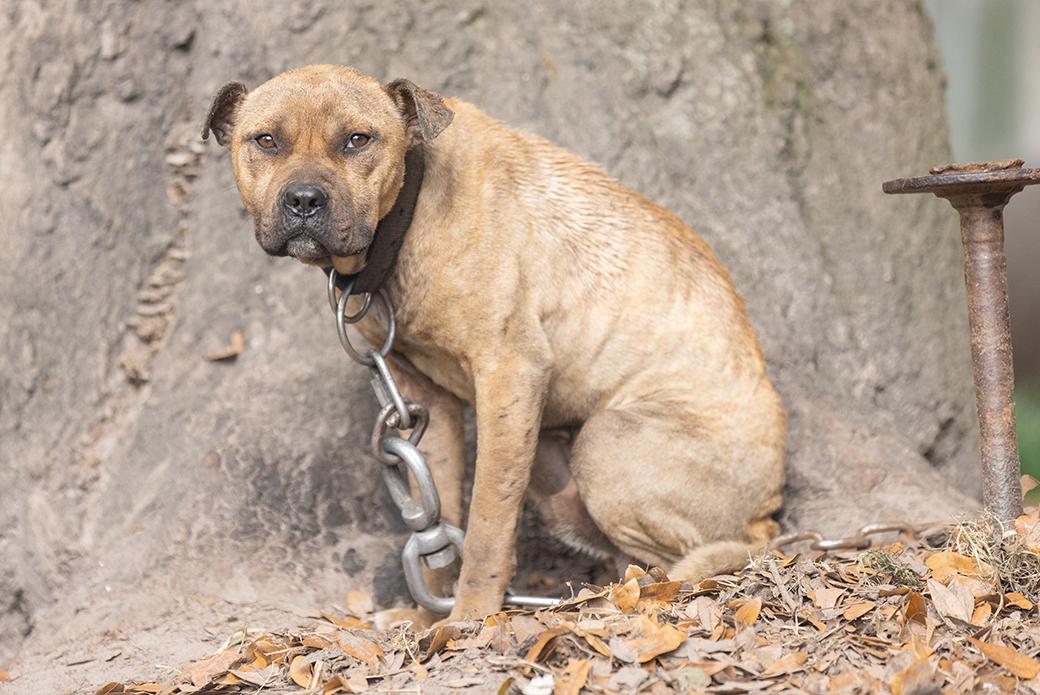
We are committed to working to bring dogfighting to an end through direct boots-on-the-ground support with seizures, subject matter consultations to assist investigations, and providing trainings for law enforcement across the country to enhance their ability to identify, investigate, respond to and prosecute dogfighting cases. In addition to our rescue and care efforts, we held a comprehensive dogfighting investigation and response workshop in North Carolina, attended by more than 50 law enforcement officers, prosecutors, veterinarians and sheltering professionals.
If you suspect that dogfighting or other animal abuse is happening in your community, please speak up. This National Dogfighting Awareness Day, we urge you to become an advocate for dogfighting victims and find out how to report animal cruelty
Horse Rescue in Montana
Nearly 90 Morgan Horses were rescued from neglect and brought into ASPCA care in one of the largest equine cruelty cases in recent years. With support from local partners, the ASPCA provided months of veterinary treatment, hoof care, behavior support and daily feeding through winter. Many of the horses from the case have found new, loving homes.
Read more about the horse rescue
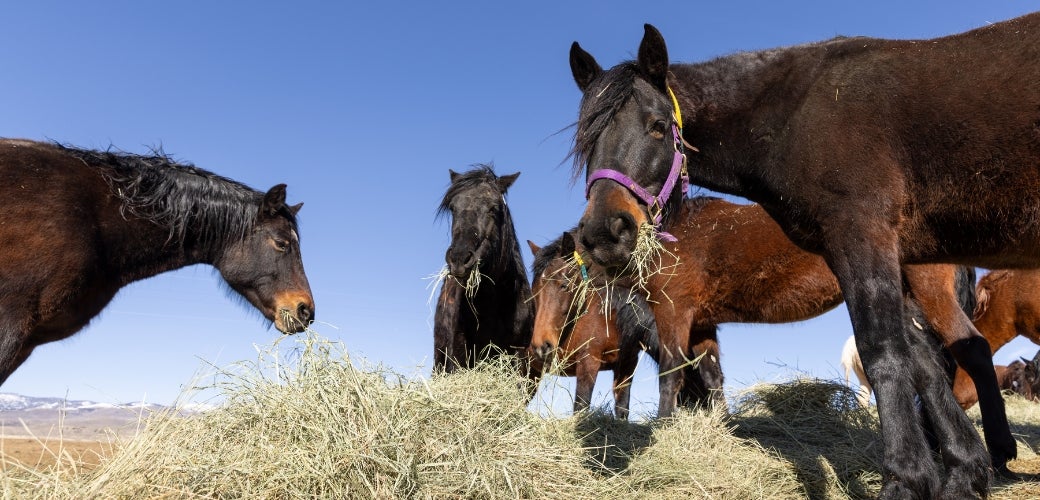 In January 2025, at the request of the Madison County Sheriff’s Office, we assisted with the extended care of nearly 90 Morgan horses who were seized as part of an investigation into alleged animal cruelty from a property in Madison County, Montana.
In early April, we were granted legal ownership of the horses and were finally able to begin the process of finding them loving homes.
A case like this, with close to 90 large animals in need of daily care, can present unique challenges and takes a tremendous amount of teamwork. To give our supporters an inside look into the care, time and collaboration that went into this case, we’ve asked ASPCA Equine Welfare Vice President Christie “Tex” Schulte-Kappert to tell us about her time working on this case and caring for these equines.

Q: How did the ASPCA Equine Welfare team help in this case?
A: In this case, alongside our other ASPCA teams, we provided horse care, behavior and training evaluations, and evaluated and treated medical and hoof conditions in collaboration with local providers. Because the horses affected by this case are a breed called Morgan Horses, which is a historic breed developed in the late 1700s in the United States, we collaborated with the American Morgan Horse Association (AMHA) to identify the horses during the process of helping them find good homes. We also conducted a six-day adoption event where 57 horses were adopted directly from the temporary shelter into new homes. We transported horses who needed more rehabilitation or evaluation before adoption to our ASPCA Right Horse Partner shelters/rescues, where they are getting expert, advanced care so they can be adopted soon.
Q: It’s not all that often that nearly 90 horses come into our care. Can you describe what a rescue like this looks like?
A: You’re correct! This is a bit of an unusual scenario for us because we focus a lot of our work on developing programs that help owners before horses ever get to a point of cruelty and neglect. For example, we have a program in Oklahoma where any horse owner can access subsidized veterinary care or safe rehoming, in an effort to give horse owners a judgement-free place to turn if they hit hard times. Many of our ASPCA Right Horse Partners offer similar programs nationwide, and we have supported many of these programs with grant funding over many years.
In this case, we were luckily able to temporarily shelter the horses at the ranch where they were already located, which meant we didn’t have to move them right away. We brought in tons of hay and feed and made sure they had clean water around the clock—a big job in the negative temperatures. We reinforced pens and fences so they had safe enclosures, and for horses in small areas, we made sure they got turnout and exercise. We also made sure they weren’t too crowded and were housed in groups so they could socialize happily. Most importantly, we had them all seen by veterinarians and farriers for long-overdue care.
Q: Can you describe the condition the horses came to us in? Were any medically compromised or in need of help behaviorally?
A: By the time we started caring for the horses, the Humane Society of Western Montana (HSWM) and Madison County Sheriff’s Office (MCSO) had provided good quality hay for a few months, so many had gotten back up to a healthy weight. Many of the horses had untreated medical conditions like metabolic diseases and various lamenesses (injuries or other conditions in their legs and/or hooves that can be painful and debilitating). One mare had an eye injury which we treated, and another had a painful tooth/sinus abscess. Several horses showed signs of laminitis, which is a very painful condition that affects the hooves and can easily become serious or chronic. Many of the horses had not had good hoof care for a long time, so they were suffering from long toes, poor hoof angles and other hoof problems that made standing and walking painful and can impact their long-term health and soundness. For large prey and herd animals like horses, these conditions can be extraordinarily painful, debilitating and even life-threatening.
Behaviorally, many horses were fearful and hard to catch, which made basic care difficult. It appeared some had not been handled in a long time, and many of the young horses appeared to have never had basic halter training.
Q: What does rehabilitation look like for these horses?
A: After the basics of enough quality hay/feed and water, the horses all needed veterinary care. Veterinarians examined each horse individually to identify issues and create a treatment plan (such as for the metabolic disease, laminitis and lameness), and vaccinated each horse. Farrier care was also a huge part of their rehab, as it can take months or longer to correct issues as the hoof regrows. The farriers examined each horse individually as well, and we took detailed notes about their initial status and the ongoing plan. For horses with more complex hoof issues, we took radiographs (X-rays) so that the farriers could see the underlying bones of the hoof and trim and shape the foot accordingly.
Q: Beyond rehabilitation, housing and caring for this many horses is a feat in and of itself. Can you explain what daily care has looked like and how many people are needed to get these animals the care they need?
A: We had a team of 6-12 dedicated staff on the ground every day from mid-January through the end of April taking care of the horses’ daily needs and bringing them back to health. We also coordinated with two local veterinarians and three local farriers, who provided excellent care. Especially in the winter, keeping water thawed was a full-time job! We ran several generators and broke ice so that each horse had access to clean water in sub-zero temperatures. We also fed extra hay to help horses stay warm in the cold weather. And every day, we gave medications to horses who needed them and treated any ongoing injuries or conditions. This case was unique in part because of the sheer size of the herd, so daily care was a massive undertaking, but one that our teams were prepared for.
Q: Are there still horses in our care? If so, why, and what care are we providing them?
A: EVERY horse from the case has been placed! Over 60 in total were ready for adoption right away after we gained custody, thanks to the hard work our teams had put in for the four months we cared for them at the temporary shelter. These lucky horses were adopted directly into new, loving homes in mid-late April, and we’re already hearing happy updates from their adopters as they settle in. Others went to ASPCA Right Horse Adoption Partners for further rehabilitation so they can be adopted soon. We are also collaborating closely with the AMHA to identify the horses via DNA test, register them with the breed registry whenever possible, and provide their new owners with those registration papers, which are an important link to their identity and history.
Q: Why is the work we’re doing with these horses, and our equine work in general, important?
A: While it may not be as common to own a horse as a dog or cat, they need just as much care and protection as small animals. Horses can become at-risk for many reasons, and our equine welfare work is focused on preventing horses from falling into bad situations whenever possible and helping them get to new, loving homes as quickly as possible. This case is a strong example of how vulnerable horses are, and how much work it takes to get them healthy again and ready for new homes. It takes a lot of knowledge and dedication from many different people to help a group of horses this size; we have the unique ability to take on such a large case.

New Animal Support Center in Mississippi
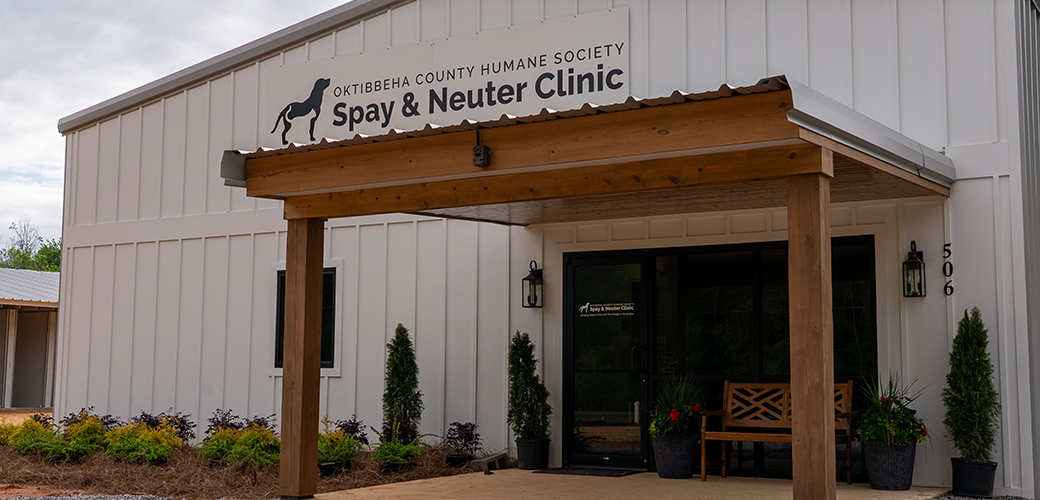
In partnership with Oktibbeha County Humane Society, the ASPCA opened the OCHS Animal Support Center in Starkville. The facility includes a spay and neuter clinic and the VanLandingham Kennel Facility, which will support thousands of animals each year through preventive care and relocation. This new center expands the region’s ability to care for shelter animals and help them find safe, loving homes.
Read about the Animal Support Center
On April 8, in collaboration with Oktibbeha County Humane Society (OCHS), we announced the opening of the OCHS Animal Support Center by the ASPCA, a first-of-its-kind facility in Mississippi that will bring animal sheltering and veterinary care services to thousands of vulnerable animals in the state each year. The Animal Support Center will house the OCHS Spay & Neuter Clinic, a stationary spay/neuter clinic for pet owners and shelter animals, and the VanLandingham Kennel Facility, a hub for the region’s shelter animals where they will be provided temporary care in preparation for relocation to other shelters for adoption.
“The opening of the OCHS Animal Support Center marks the beginning of a new era of expanded animal welfare services for dogs and cats in Northeast Mississippi,” says Matt Bershadker, ASPCA president and CEO. “The ASPCA® is incredibly proud to have partnered with OCHS over the past eight years with a shared goal of creating a better future for animals across the region, and this new center is a monumental step forward in creating that better future for vulnerable animals.”
The Animal Support Center, which was built in part through $1 million in grant funding from the ASPCA, will help increase and improve OCHS’s capacity to care for animals in Starkville and the shelter’s 17-county service area. The Animal Support Center’s high-quality, high-volume spay/neuter and relocation efforts will impact thousands of animals in the state by reducing the number of unwanted litters within the community, decreasing animals’ length of stay at shelters in the region, and improving access to low-cost spay and neuter procedures for pet owners. The new Spay & Neuter Clinic will increase the shelter’s current spay/neuter capacity from 2,900 to 5,800 surgeries annually.

The opening of the Animal Support Center’s VanLandingham Kennel Facility marks an especially important extension to the OCHS campus. Resulting in roughly 3,300 square feet of additional space, including 30 new kennels, the VanLandingham Kennel Facility provides a separate holding area for animals being transported to other shelters for adoption, improving health safeguards for both shelter and transport populations. A covered space with a weatherized loading and unloading area will accommodate larger numbers of animals at one time, enabling transports to happen more efficiently.
Through the VanLandingham Kennel Facility, OCHS will be able to increase the number of animals they can send on transports annually from 1,800 to 3,500. With shelter animals in Mississippi experiencing increased lengths of stay due to ongoing capacity challenges and strained resources, the VanLandingham Kennel Facility will help displaced and vulnerable dogs and cats move to shelters with the space and resources to provide the care they need until they are adopted.
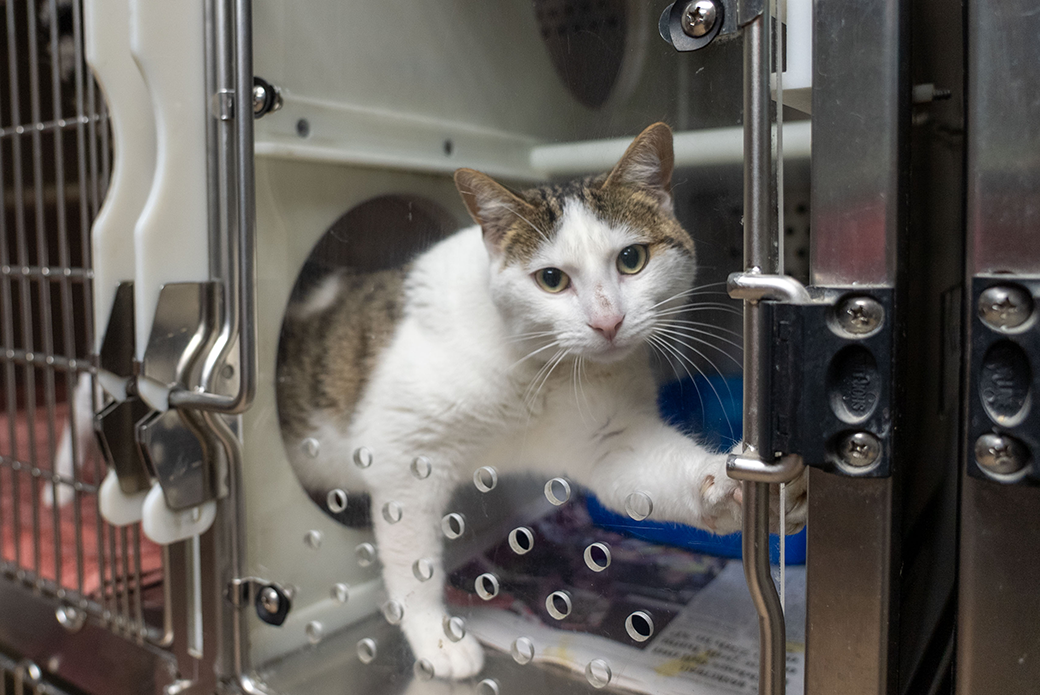
“Over the next few years, we hope to see the OCHS Animal Support Center by the ASPCA serve as a catalyst for positive change in animal welfare in the region, enabling OCHS to not only support more animals, but serve as a resource for pets and their people,” says Michele Anderson, executive director of Oktibbeha County Humane Society. “With increased transport capacity and expanded spay/neuter services, we expect to see more positive outcomes for animals in the region. Through this new facility, OCHS and our partners will show what’s possible when we come together to tackle animal welfare challenges head-on.”
Over the last eight years, the ASPCA and OCHS have worked together to improve the lives of shelter animals in the Starkville, Mississippi, area and surrounding communities. OCHS is a partner shelter in the ASPCA Animal Relocation Program, an initiative that works with overcrowded shelters in under-resourced areas of the country to relocate their animals to other shelters where those animals have greater chances of being adopted into loving homes. Since 2016, OCHS has partnered with us to move over 18,000 animals from OCHS to shelters with more opportunities for adoption.

Wildfire Response in Los Angeles
Following the Eaton and Palisades Fires in January 2025, the ASPCA was on the ground in Southern California assisting nearly 4,000 animals through rescue operations, sheltering and veterinary care. Working alongside Pasadena Humane and other partners, our team has supported lost pet reunifications, provided field response expertise and distributed critical supplies.
Read more about the wildfire response
In January 2025, the ASPCA disaster response team was on the ground in Southern California at the request of Pasadena Humane, Los Angeles County, and Los Angeles City officials assisting nearly 4,000 animals in the aftermath of the devastating Eaton and Palisades Fires.
Alongside local and national partners including the International Fund for Animal Welfare (IFAW), American Humane Society (AHS), San Diego Humane Society, the San Diego Department of Animal Services, and the North Valley Animal Disaster Group, we assisted with immediate animal needs through search and rescue, feeding-in-place operations and sheltering support. The ASPCA’s disaster response team responded to more than 520 service calls from community members requiring assistance with lost and found pets, emergency veterinary care, pet supply needs and more.
“Providing vulnerable animals, pet owners, and shelters with lifesaving assistance in the aftermath of the devastating wildfires in Los Angeles has been a collaborative effort, and the ASPCA is dedicated to working with our local and national partners to continue providing critical rescue, care, and shelter support for as many animals as we can,” said Matt Bershadker, ASPCA President and CEO. “The ASPCA immediately mobilized to assist ongoing relief efforts, and we are immensely grateful to work alongside the many disaster response partners who have stepped up to ensure the safety of displaced animals and help impacted families care for their beloved pets.”
Ongoing Response Efforts
Highly trained ASPCA disaster response personnel assisted Pasadena Humane with daily shelter support and field operations including animal search and rescue in collaboration with Los Angeles County Animal Care & Control. We also supported animal reunification efforts, providing disaster management guidance and assisting with pet supply distribution and other critical aid. These efforts have supported needs stemming from the Eaton Fire, which decimated areas of Pasadena, Altadena and surrounding communities after setting ablaze the evening of January 7.
At the request of Los Angeles Animal Services (LAAS), the ASPCA has also facilitated animal search and rescue in areas devastated by the Palisades Fire in the Pacific Palisades neighborhood of the city. National Animal Rescue & Sheltering Coalition (NARSC) partners IFAW and American Humane Rescue, a program of AHS, are on the ground at the request of the ASPCA, supporting this vital work and assisting with planning and coordination, animal search and rescue, feed-in-place operations as well as pet reunifications in the field and at local shelters.
Through collaboration with LAAS and the office of Los Angeles Mayor Karen Bass, the ASPCA has helped enhance field rescue operations in impacted communities to maximize the number of animals rescued and reunited with their owners. In addition, our Los Angeles-based Community Medicine team provided LAAS with veterinary support to help local shelters prepare animals for adoption, foster, and relocation by assisting with vaccinations, health certifications, and spay/neuter.

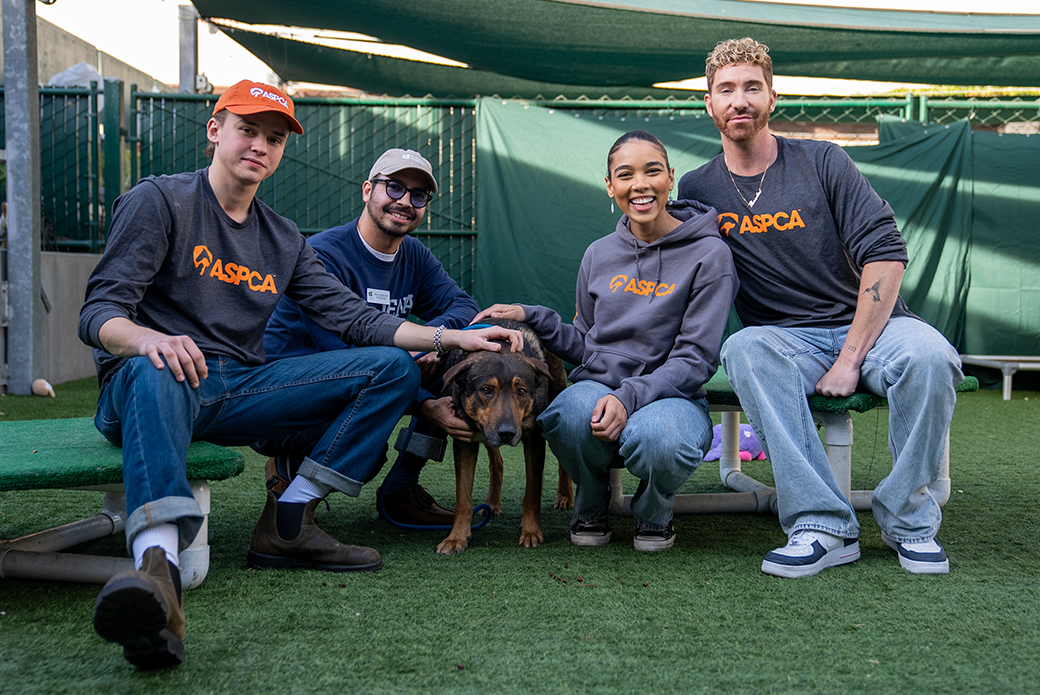
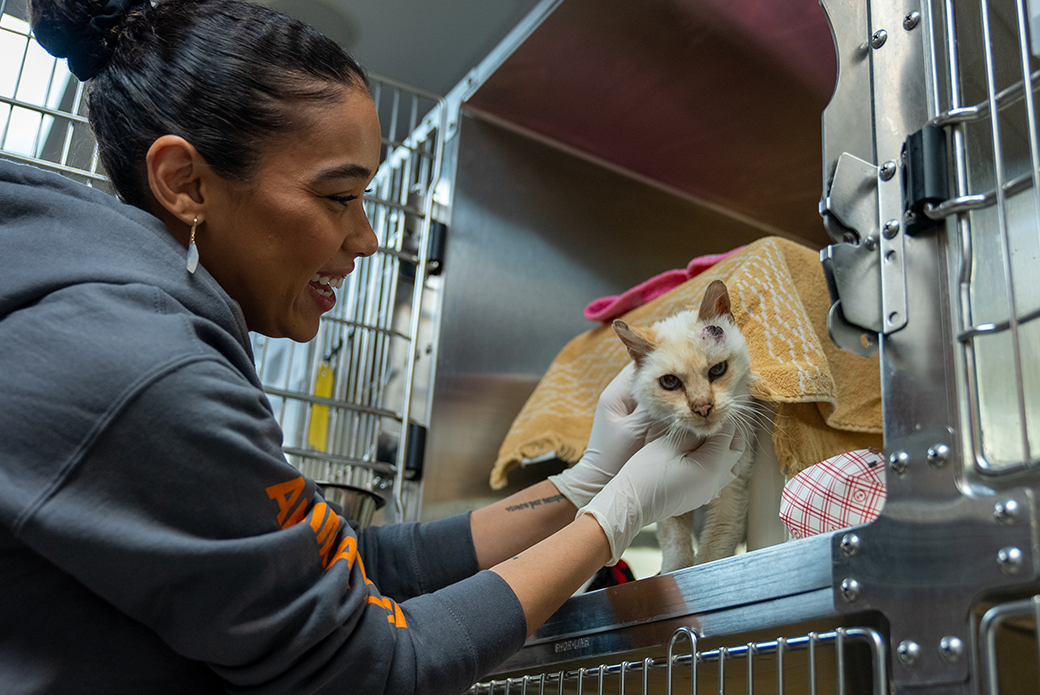
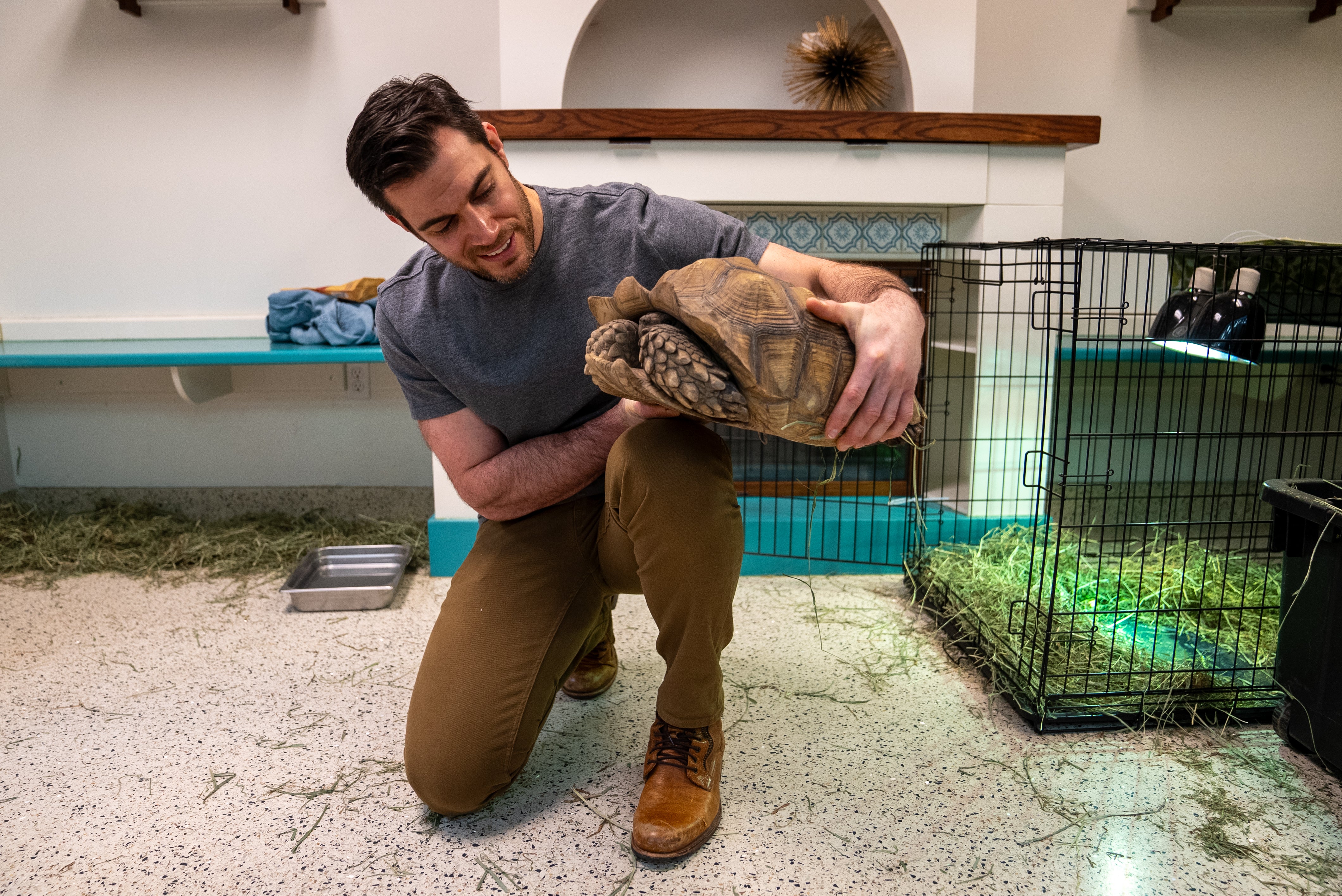


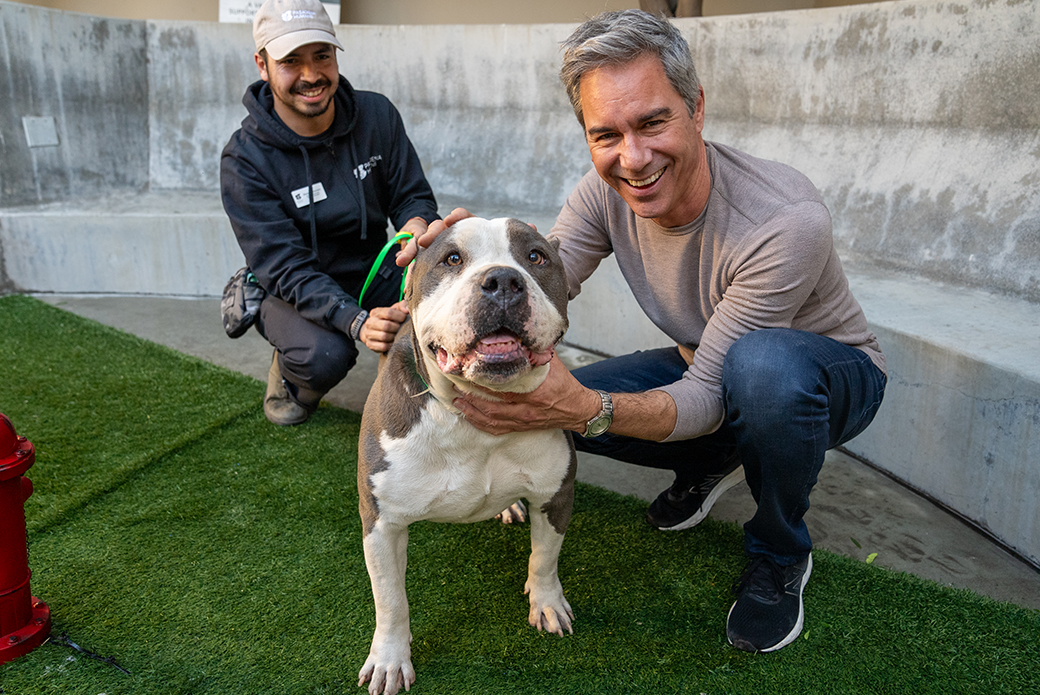

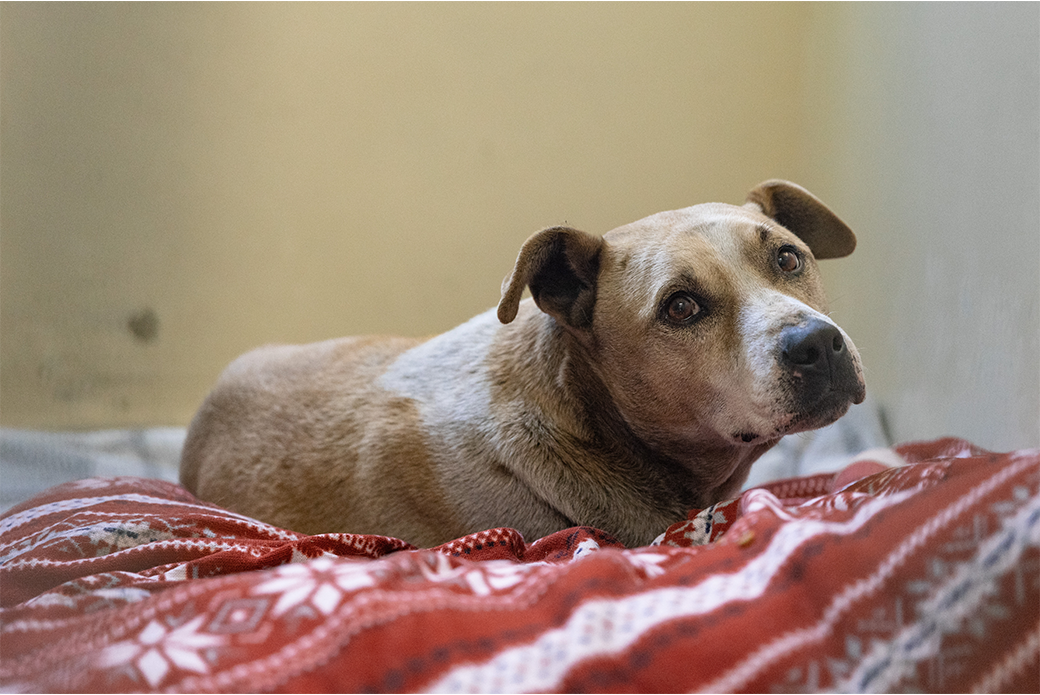
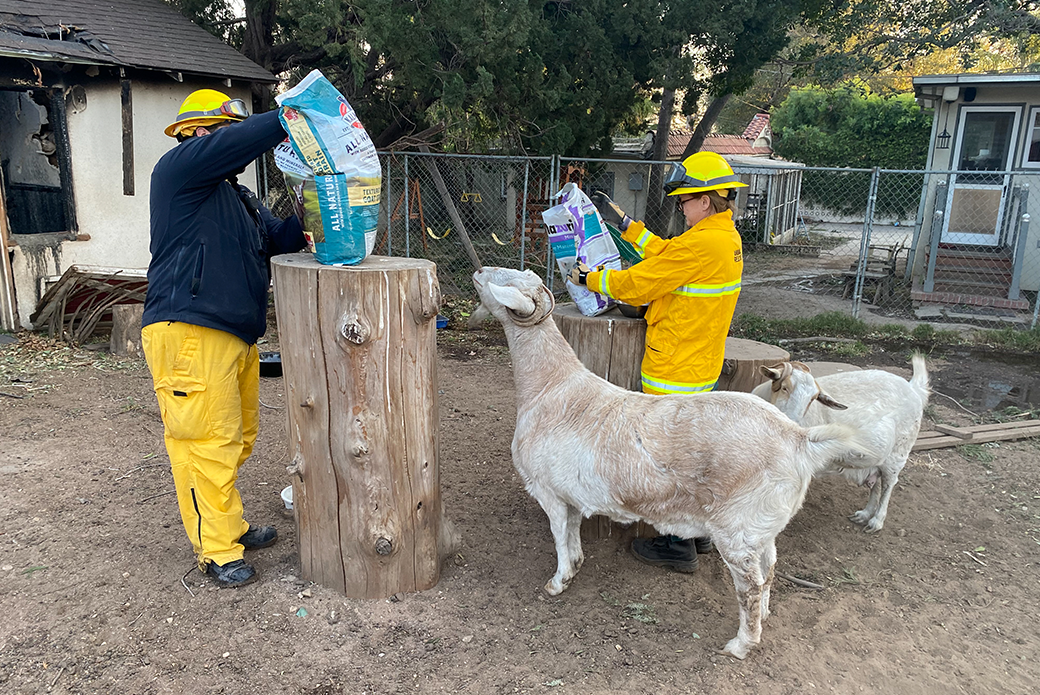
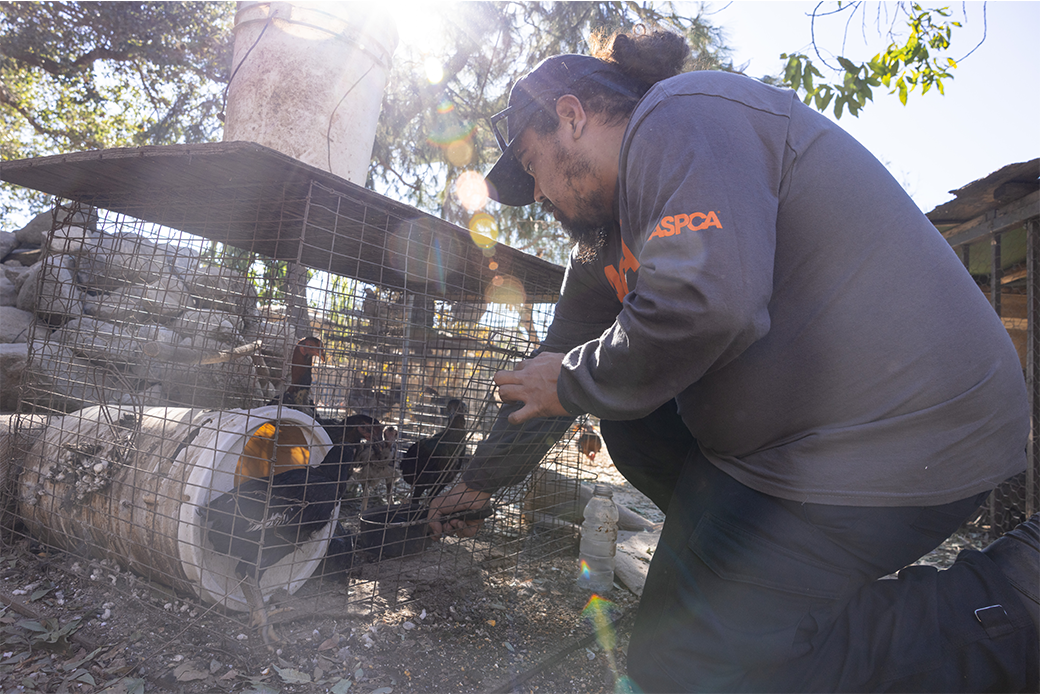
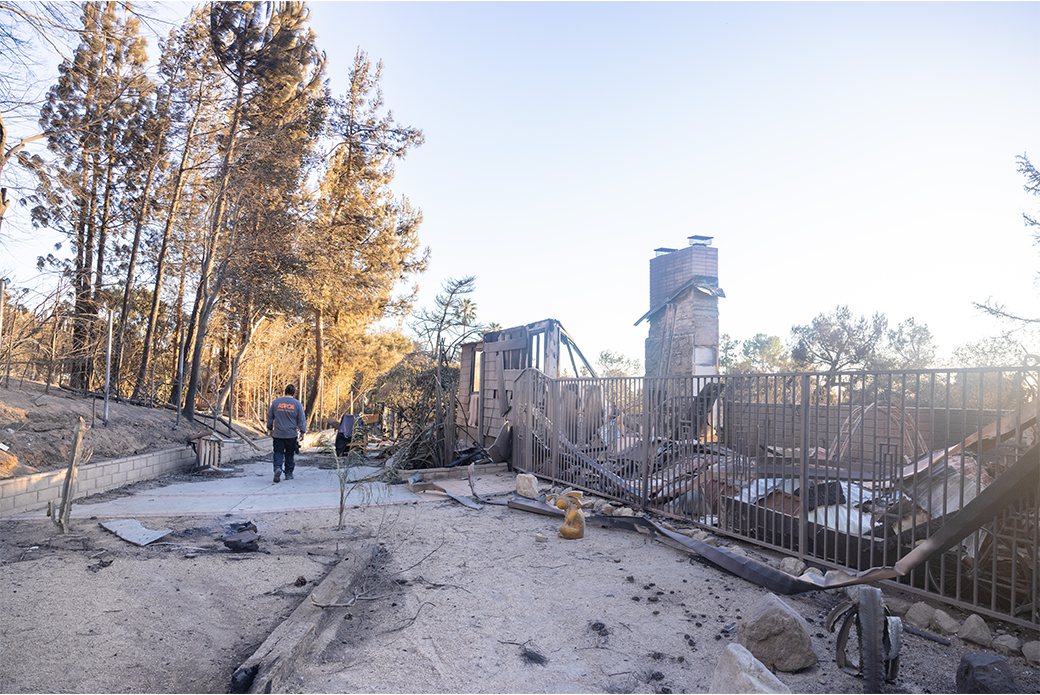


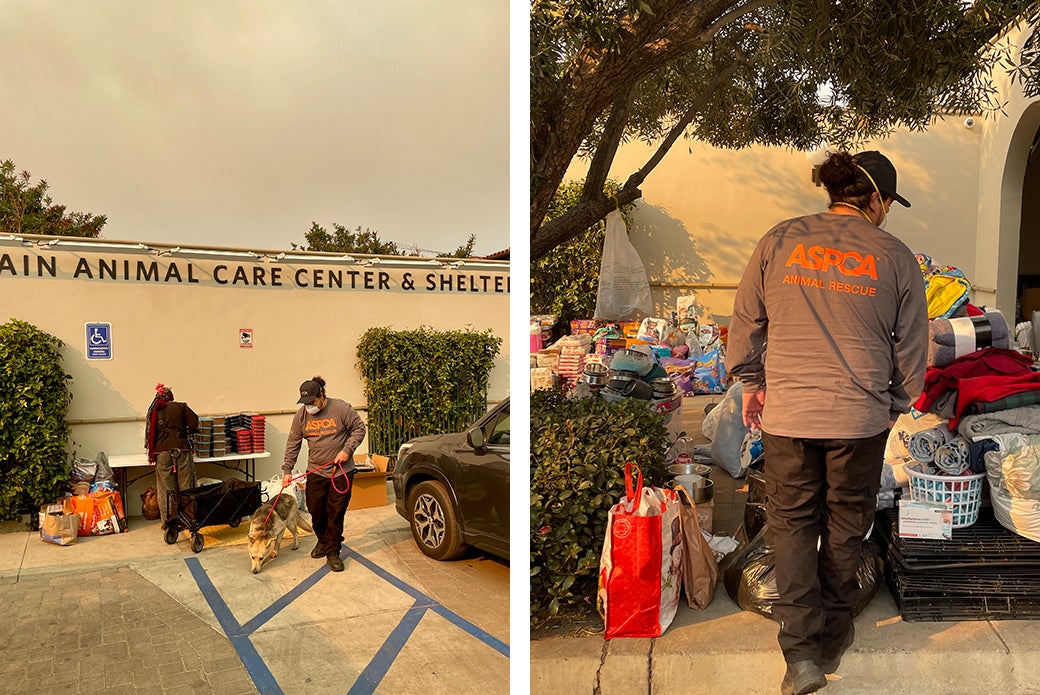
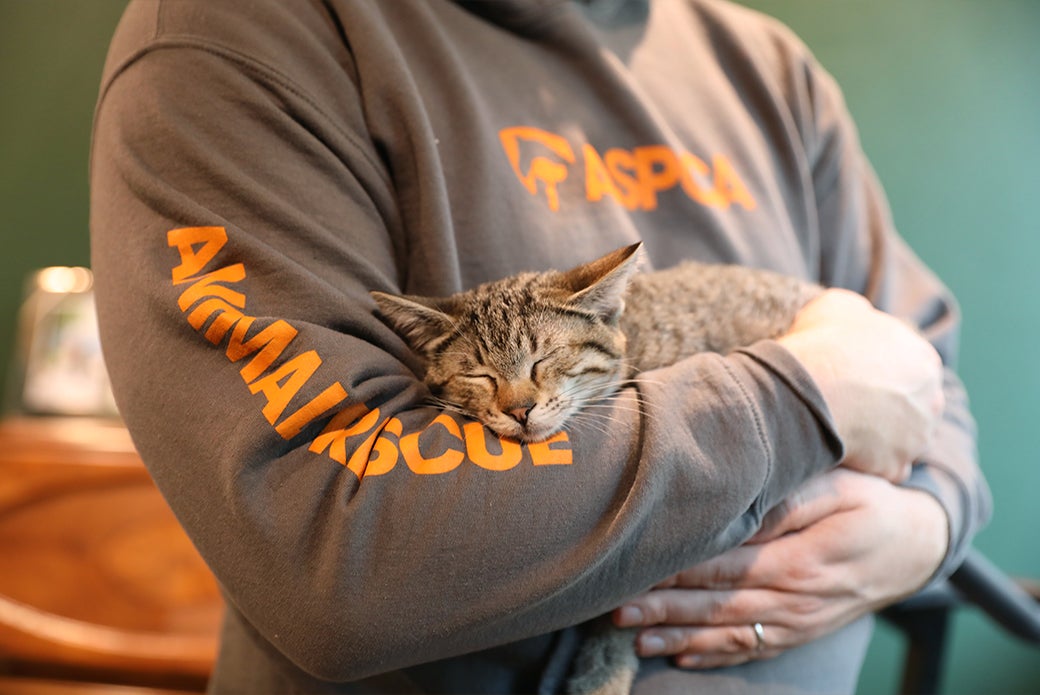

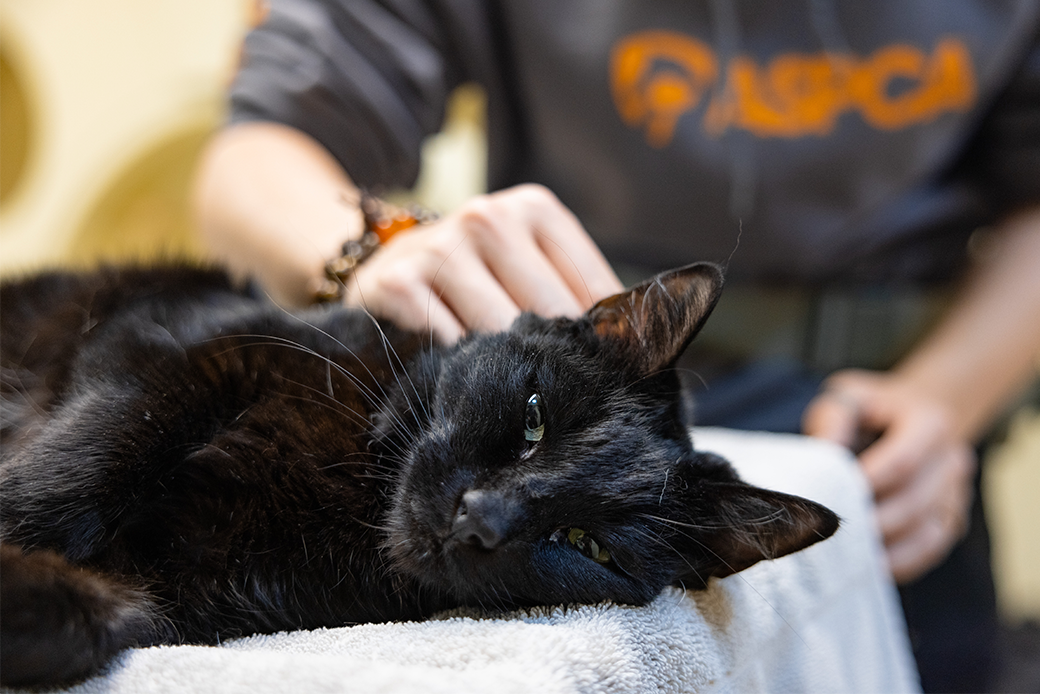
Easy Ways to Make a Major Impact
Gifts that cost you nothing now

Gifts that reduce your taxes
Gifts that provide payments for life
Gifts that make an impact now
Your Giving Toolkit
Need assistance? We're here to help!

Nicole Nahas
Sr. Director, Planned Giving & Donor Stewardship